Thursday, November 3, 2011

Pretty Pelargoniums

This post was meant to be for Clay & Limestone's Wednesday wild flower meme, but the end of the month is always hectic at work and  blogging time is limited, so I've missed the deadline. But these are too beautiful to be ignored so I am posting it anyway.  I have decided on Pelargoniums . Firstly because they would be well known to overseas readers and secondly because they are such easily grown, rewarding plants.

I know there are many sites trying to clear up the confusion between Pelargoniums and Geraniumms but in case you haven't read them – here's the quick answer. Pelargoniums belong to the family Geranicae of which there are approximately 800 species. These are divided into Geraniums with five equal petals and Pelargoniums with a variety of flower forms but mostly with 2 smaller petals above and 3 larger petals below.(Can also be the other way around - 2 large above and 3 small below). South Africa is blessed with about 220 species of Pelargonium. My garden boasts only 8 of these. Pelargoniums hybridize very easily leading to the vast variety available in nurseries and also leading to the confusion I have in correctly naming the varieties I have growing. I have got as far as putting them into categories. If there is an expert out there I would appreciate any help in naming or correcting any errors.

REGALS
These have large showy blooms in a variety of colours.
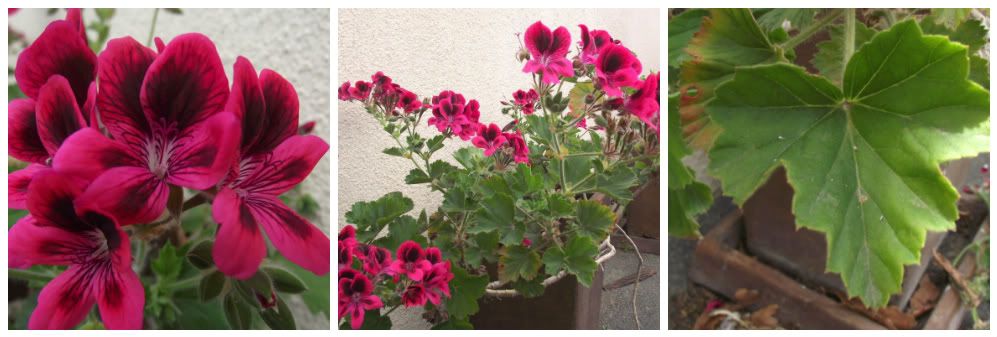
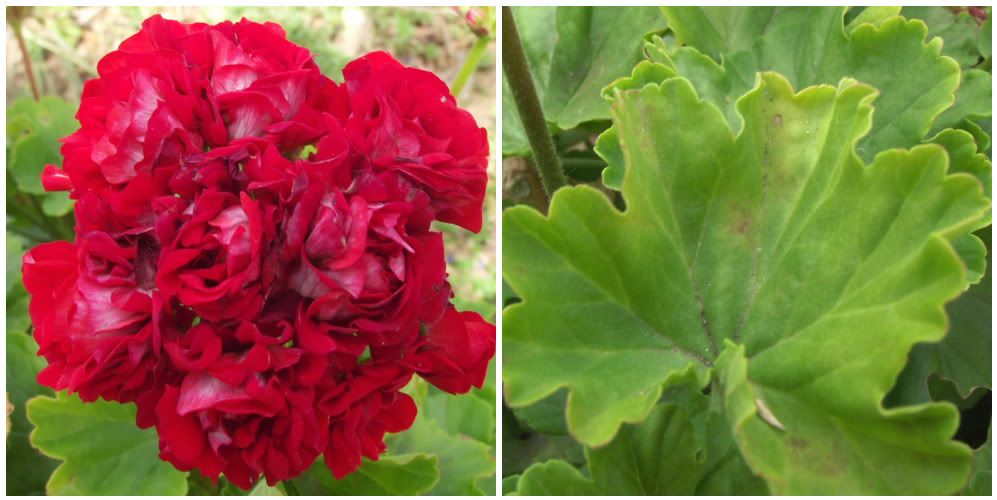
Definitely a Regal, it's blooms are absolutely stunning but despite reviewing hundreds of photo's I can't positively ID it.
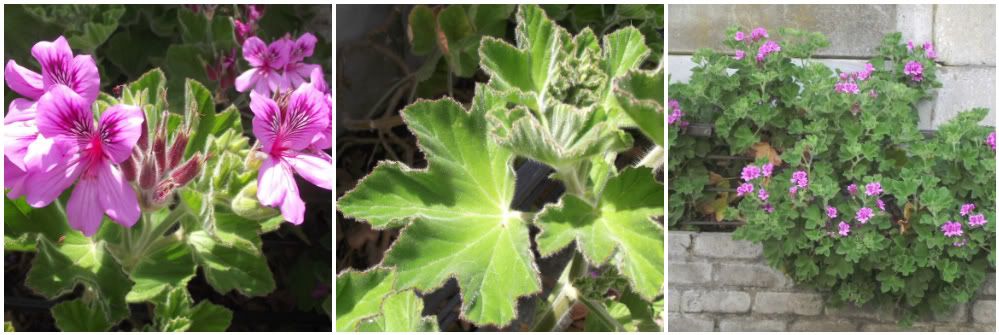
Pelargonium cucullatum - this one I initially thought was capitatum, but it has no scent and the leaves are tinged with red on the edge.


IVY LEAFED
As the name indicates these have typical ivy shaped leaves and a trailing habit.
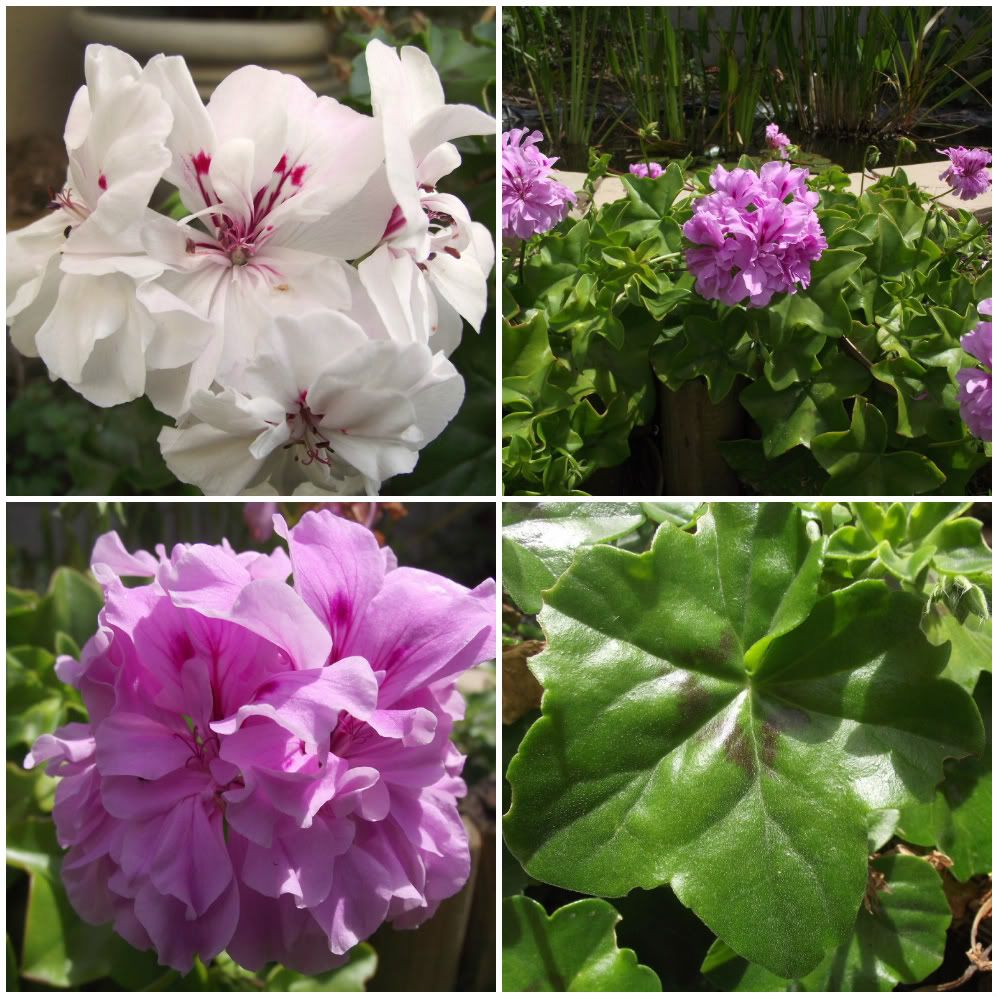
Pelargonium peltatum - the leaves are smooth and semi-succulent.

SCENTED
Flowers from this group are usually small and insignificant, but foliage is highly aromatic.
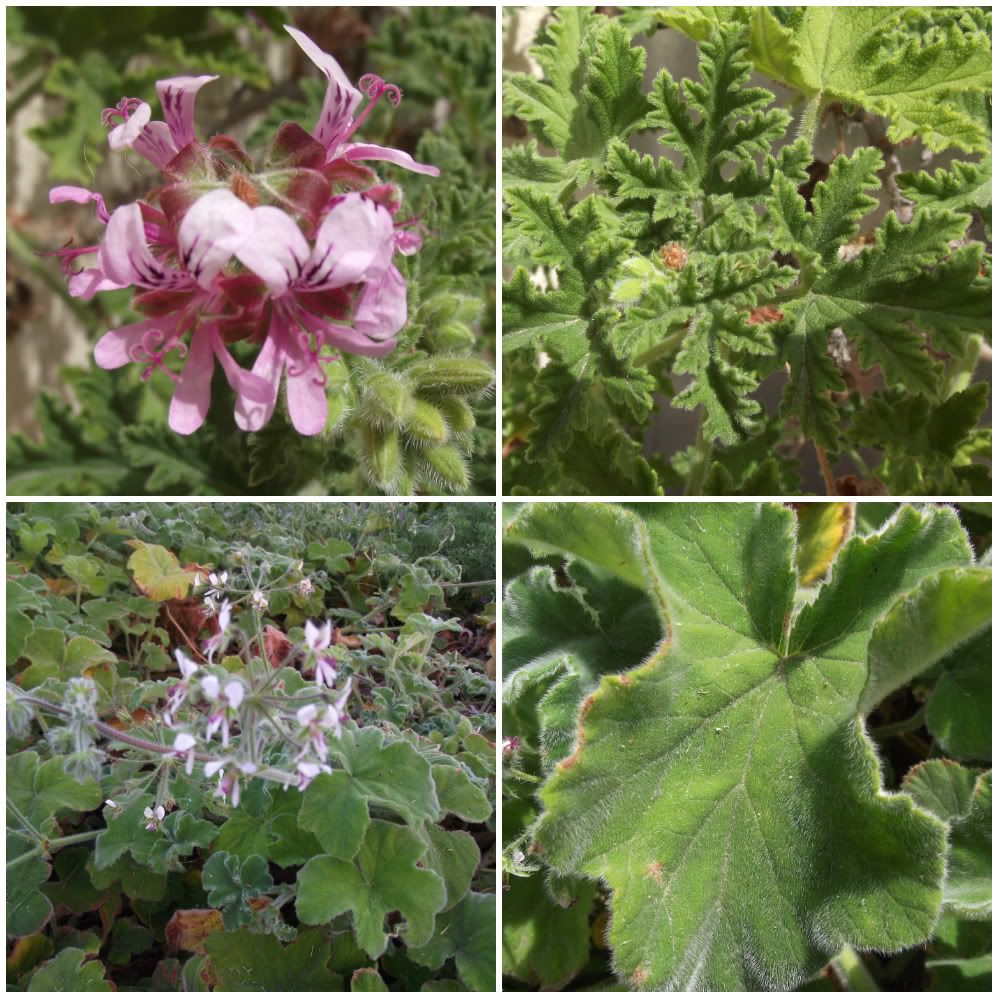
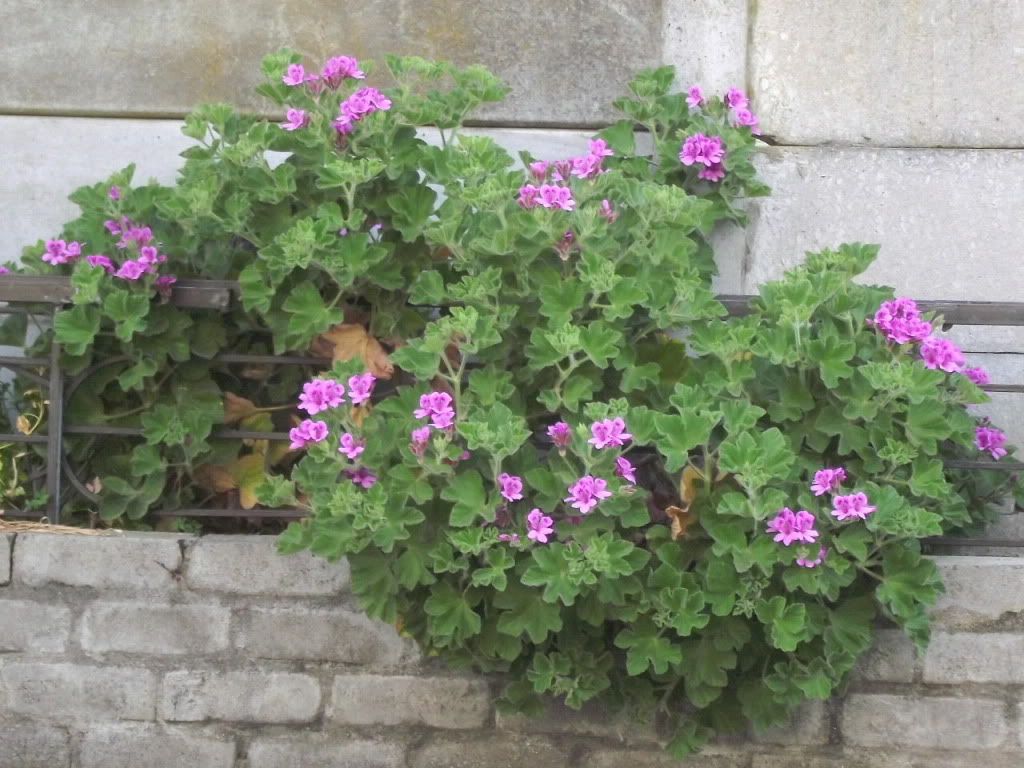
Pelargonium graveolens -Rose scented (above)
Pelargonium tormentosum - Peppermint scented (below)
I love these - just brushing against the leaves releases the most amazing aroma.

ZONALS
Most of these, but not all, have a darker horseshoe shaped mark on the leaves.
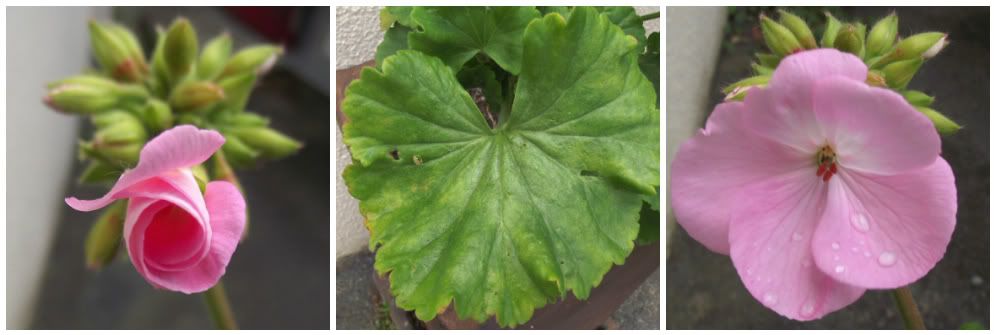
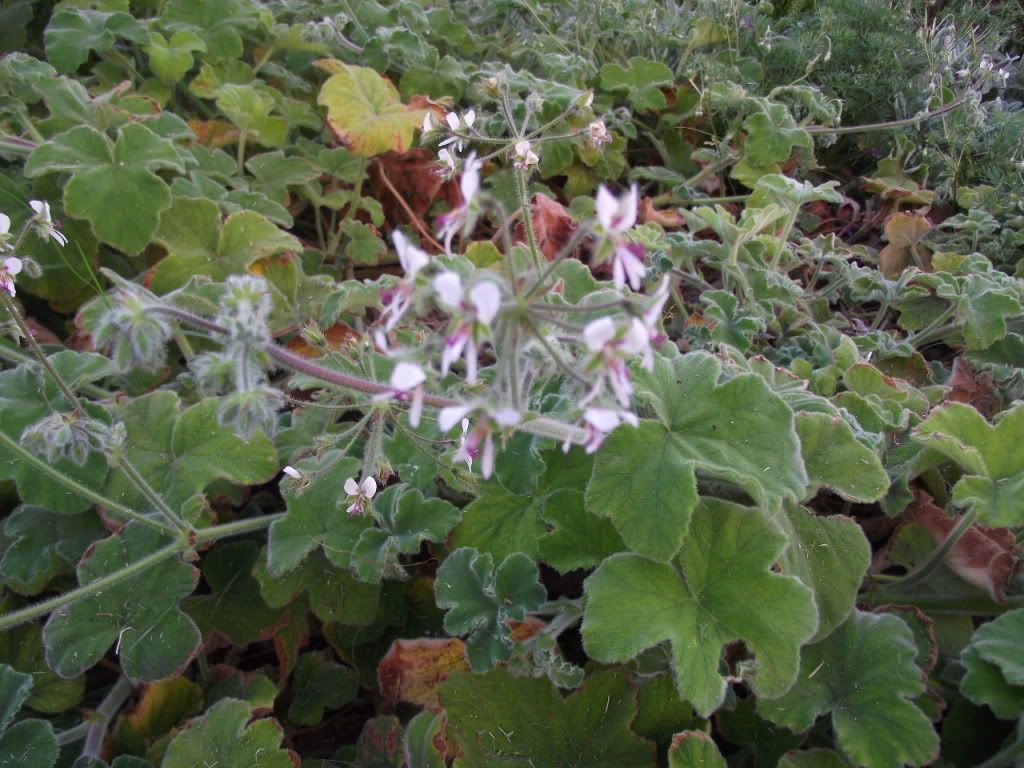
Pelargonium inquinans? Not sure about this one, it does have that typical smell, but no horseshoe marking on the leaves.
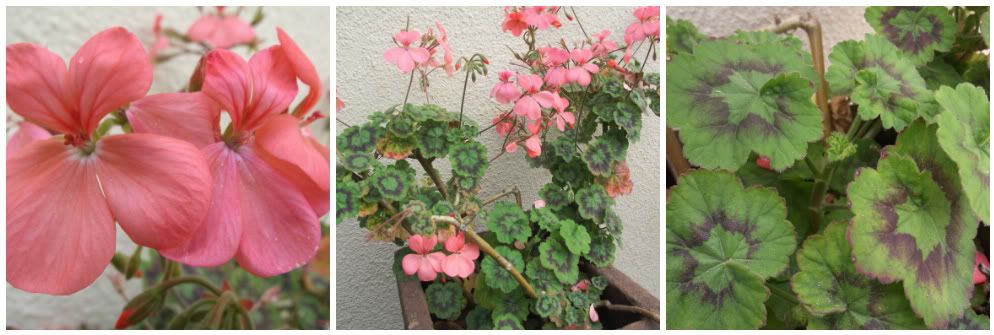
This one is definitely a Zonal - but which one?
And this one?


Monday, October 17, 2011

Garden Update October 2011

It is mid October and that means we are well into the last quarter of the year, before we know it 2011 will be history.

Before that happens I think it's time for a garden update. I'll start first with the casualties. I lost both my wild Rosemaries, two of the three Orpheums and most recently my only Lobostemen. All of these were in the front bed that we planted in April 2010. Every one of them went from looking healthy to totally dead within 2 weeks of showing the first brown leaves. I am not sure but I think it may be root rot. We have clay soils under laid by a layer we call “koffie klip” - this is basically a 300mm thick layer of small stones cemented together by clay. Although we added copious amounts of compost to the bed I don't think we dug deep enough to penetrate the koffie klip. This essentially means that the roots can't get through, so they they become waterlogged in the upper layers and become susceptible to fungi.

The other casualties have been in my back garden where powdery mildew totally wiped out one of my Anisdonteas. It also affected my Barleria and Hypoestes so badly that I got fed up and ripped them all out. Any ideas of how to treat this? I have read that spraying with milk is supposed to help, so I am trying that on my remaining Anisdontea.
RIP
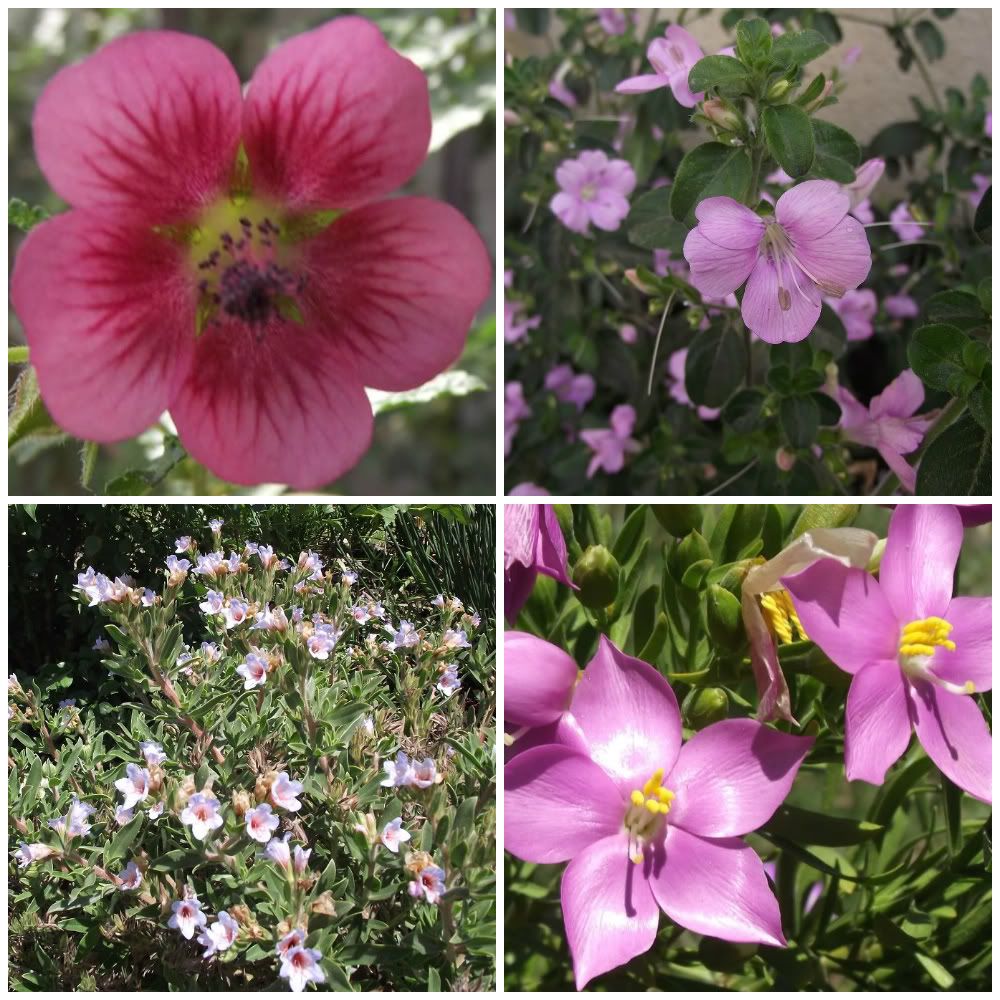
Clockwise from top left - Anisdontea, Barleria, Orpheum & Lobostemon

My ever present snails destroyed my only orange Clivia by eating right through the flower stalk just as the buds were about to open.

Although all of these failures were disappointing there are more than enough successes to make up for it.


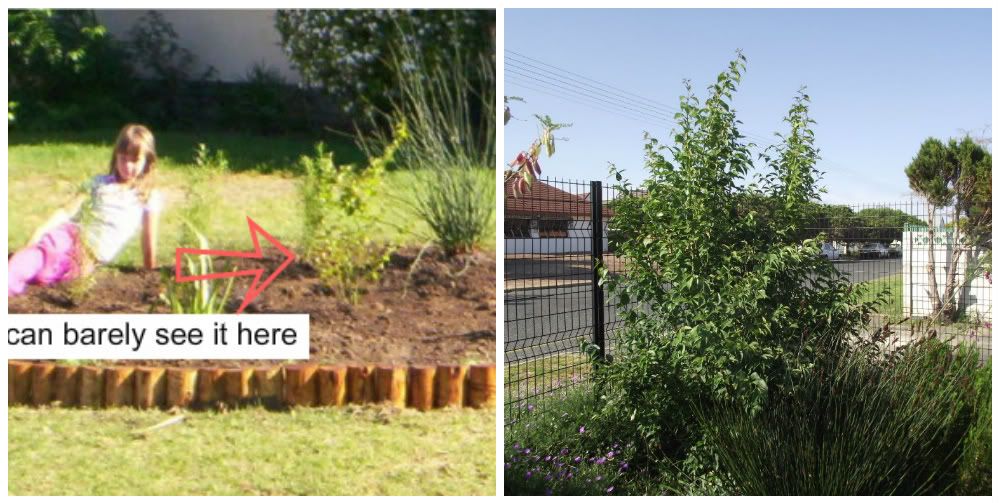
The Halleria Lucida that we planted in April 2010 is now over 2 metres tall.
Oh yes we also added a fence to the front garden - yuck!

 The Pelargonium capitatum has also doubled in size and is now in full bloom. Hopefully it will soon cover the ugly wall.

Pelargonium cuculatum
                                                                    
 The flowers on the Pelargonium tomentosum are insignificant but I can't resist touching the soft furry leaves and enjoying the peppermint scent that they release.
Pelargonium tomentosum

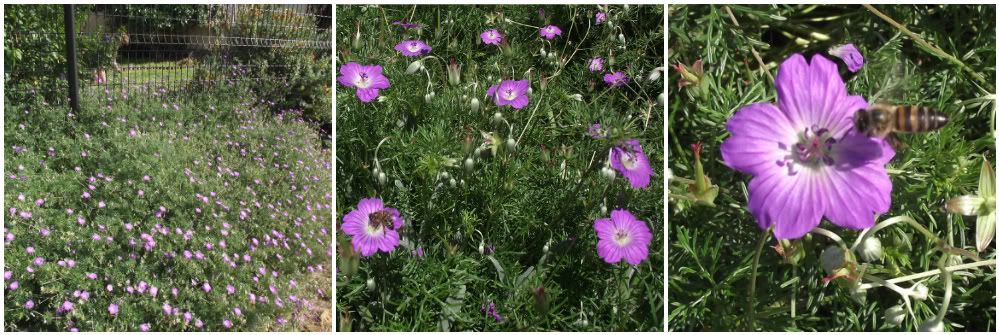
The Geranium incanum flowers for eleven months out of twelve and is popping up like a weed in almost all my other beds. This is great as it is filling up all the gaps.

Geranium incanum

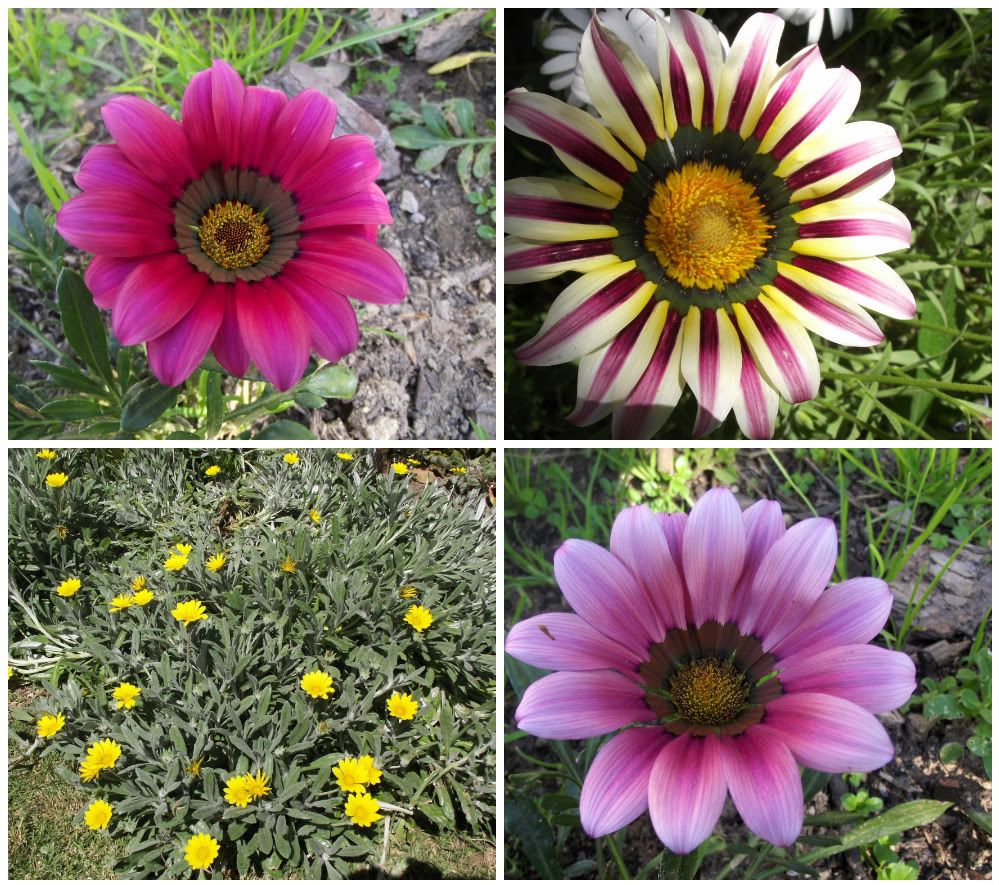
Gazania rigens is another amazing ground cover, it also flowers almost all year round and grows really fast in full sun, tolerating long periods of drought once established. You can't beat Gazania krebsiana for a stunning winter display, they have been flowering since June but they will stop flowering soon and their leaves will curl up showing their furry undersides to the hot summer sun.
Yellow Gazania rigens, an ugly duckling compared to the others, but it does flower for much longer.

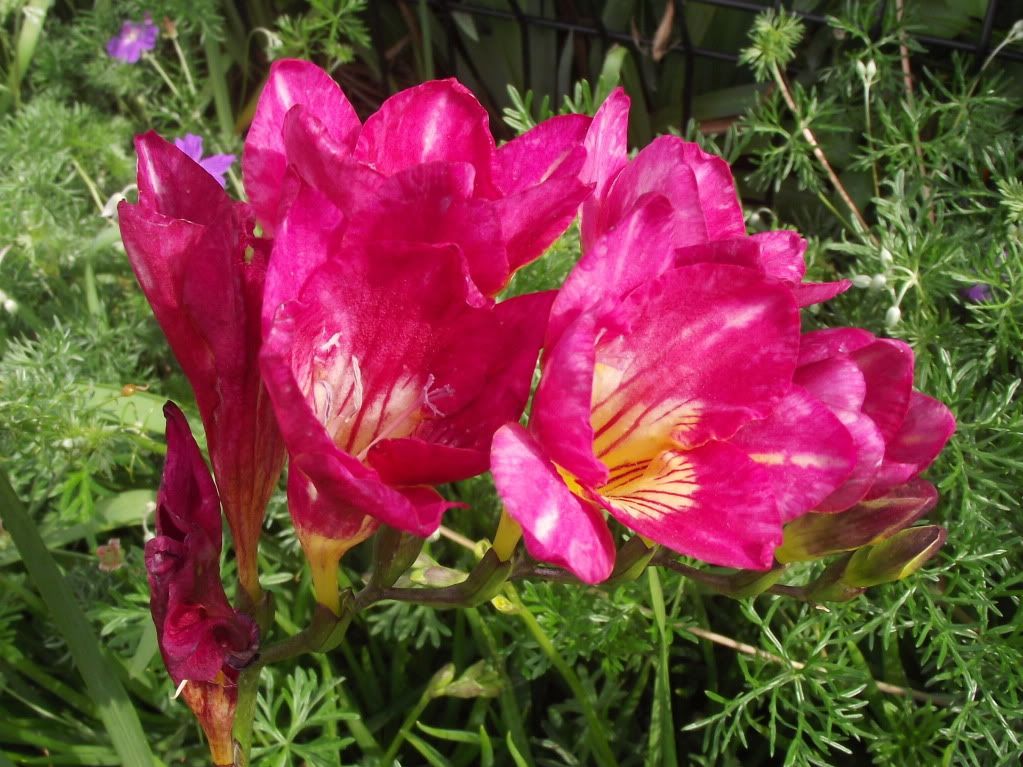
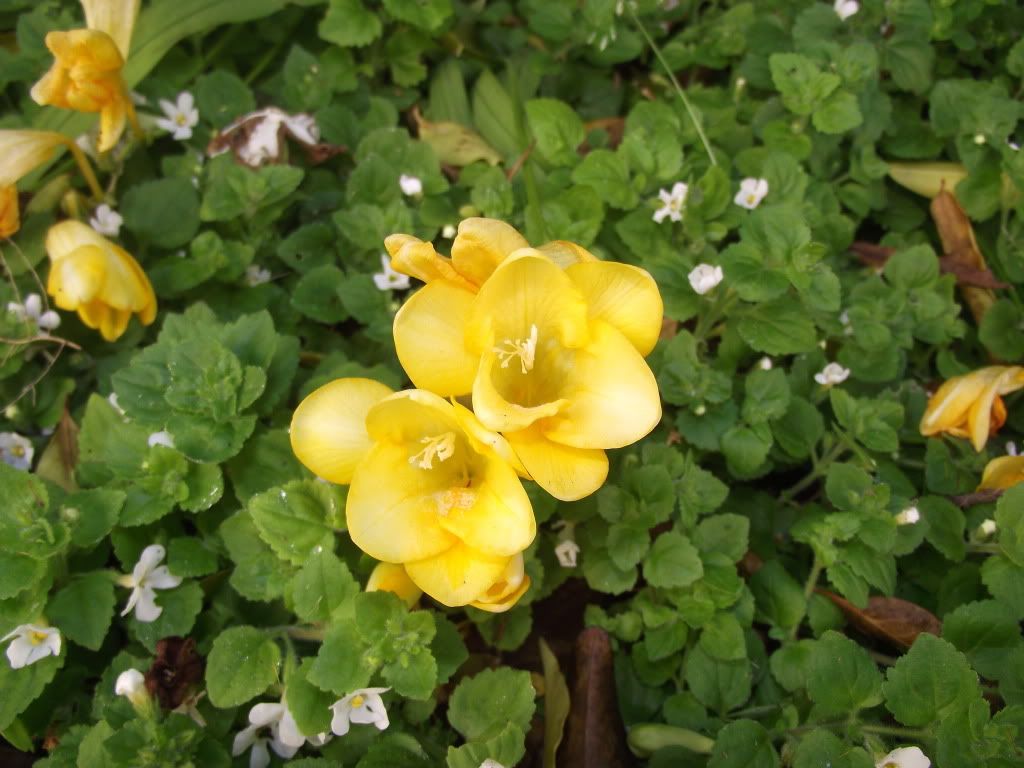
The Freesias always put on a lovely display in early spring.


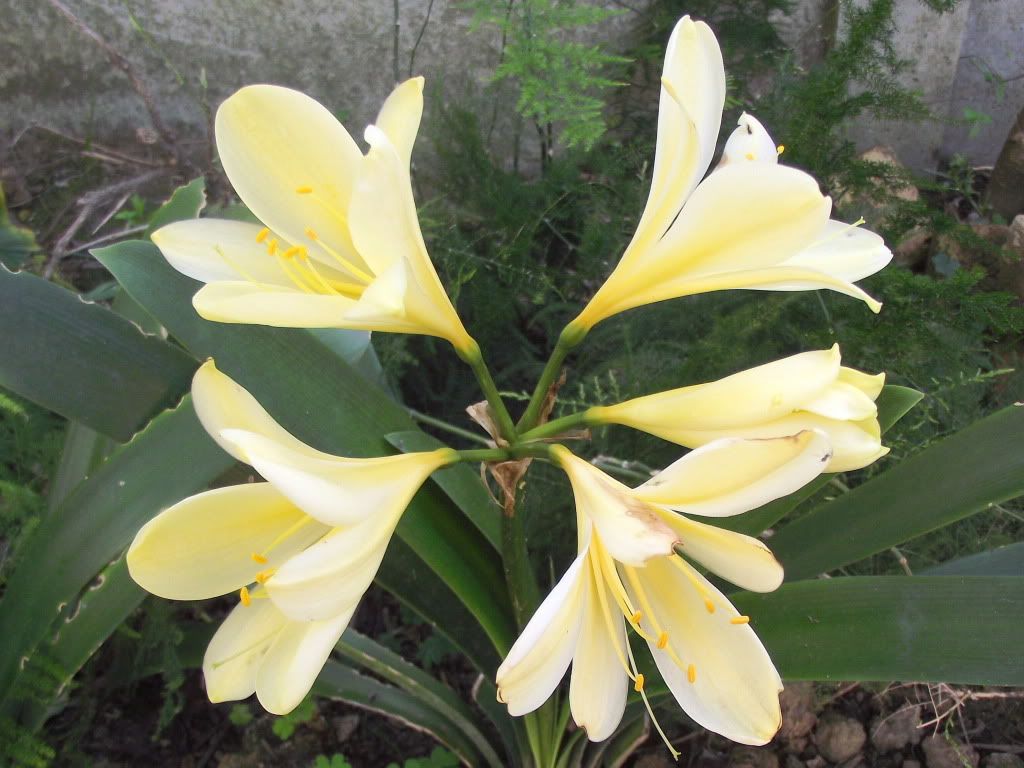
I bought some Clivias at a nursery sale, they were not flowering at the time so I assumed they would be the common orange ones - but look what I got! This is the only one of the four to flower - can't wait to see what the others are.

Dimorthopeca pluvalis grown from seed.

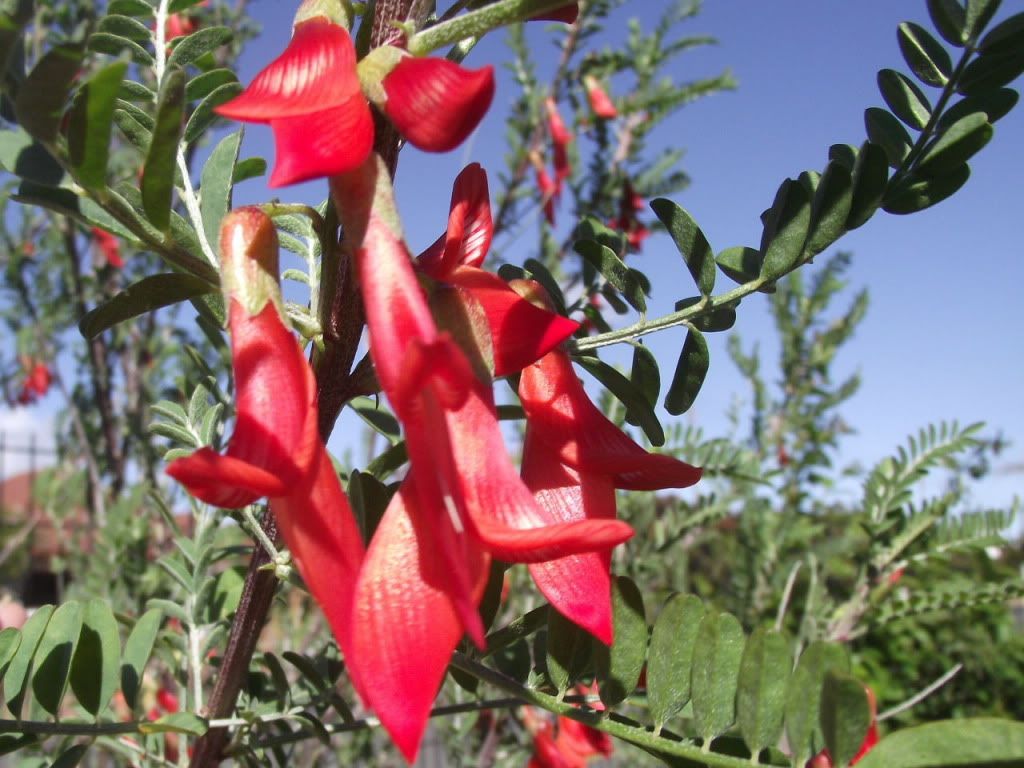
Sutherlandia frutescens- I planted two of these bushes, this one has grown much faster and put on a stunning display of flowers in Spring.

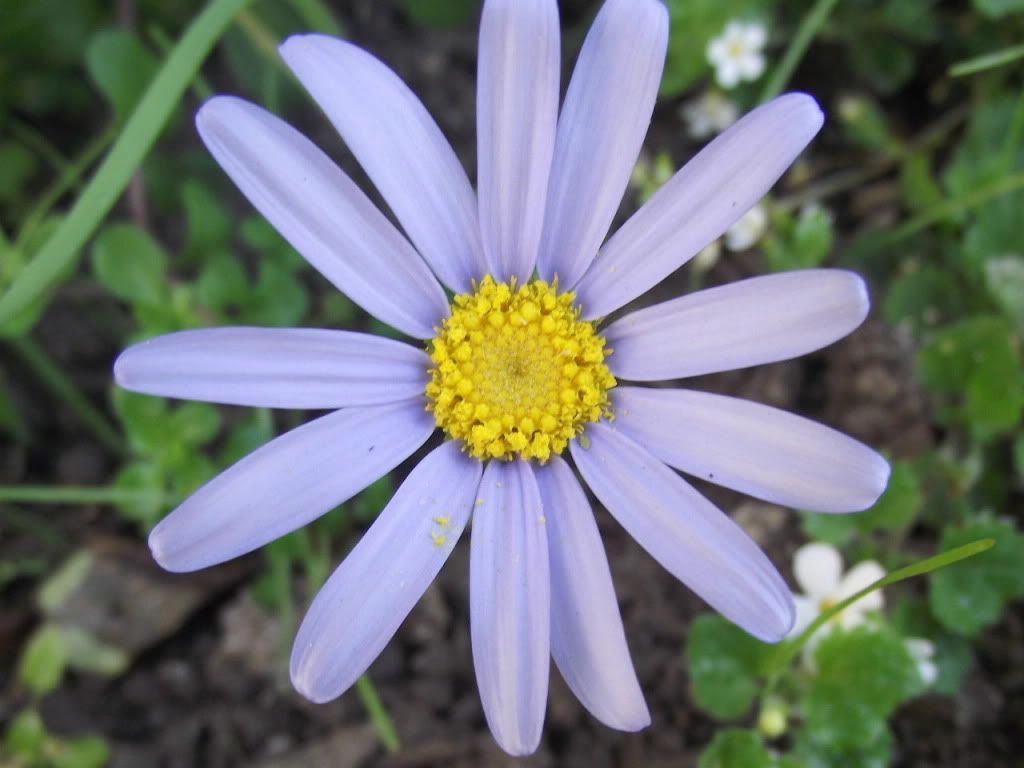
Felicia amelloides - such a versatile plant. I have them growing as a border around our veggie garden where they receive blazing hot summer sun, but they do just as well in the front garden where the bed receives only a little morning sun.

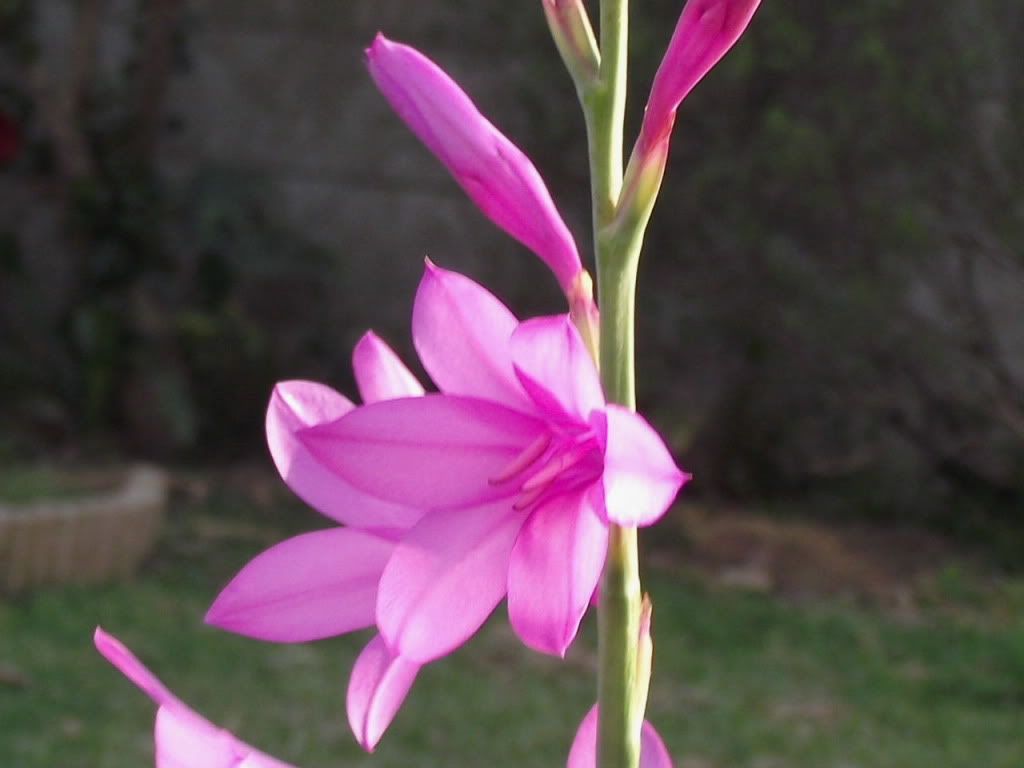
Watsonia borbonica - only one of my bulbs has flowered so far, maybe I will be lucky and get a few more before their short flowering season is over.

Tuesday, August 16, 2011

Citrusdal Sashay

Having your own business means time off is a luxury rarely afforded. But with Tuesday 9 August being a public holiday we decided to grab the opportunity, and taking the Saturday and Monday off work and returning midday Wednesday we have just enjoyed our annual leave. We wanted to go to the Orange River to visit our oldest son but with time being limited and not wanting to spend too much of it travelling, we headed off to Citrusdal instead.


We left on Saturday morning determined to enjoy our break from the start, we decided to avoid the busy N7 and instead take the quieter route. This took us through Stellenbosch, past Wellington and on to Porterville (Hi Diana) we finally joined the N7 just before Piekernierskloof and stopped as always for a leisurely meal on the top of the pass. Down the pass and just a short drive to our destination.

A glimpse of snow as we drove down Piekernierskloof


Our cottage was equipped with everything you could possibly need for a comfortable stay and with beautiful views all around we were set for a relaxing time. Our friends arrived shortly after us and stayed in the next cottage.

The rest of the day I spent lazing in the warm winter sun with my latest book – The Great Disruption.
Of course it wouldn't be SA if we didn't braai (barbecue) so as the sun dipped behind the mountain the fire was lit, providing warmth, a place to cook and best of all an opportunity to enjoy the company of family and good friends.

There is something about fresh country air that seems to make me sleep like a baby. We only woke at about 7 a.m. on Sunday morning – quite a record for me as I am usually up by 5 a.m. So as hubby started to prepare a leisurely breakfast on the fire I headed up the nearest hill to explore. Have I mentioned that I am the most spoilt woman I know?
Looking down towards the valley of Citrusdal


The same luscious berries seen by Diana at Elephants Eye – I don't know what they are either.


Breakfast was scrumptious and the sun on our verandah was lovely and warm, so out came my book again. In the afternoon I dragged hubby up another nearby hill.

The hillside was filled with flowers

Lots of tall Euryops speciosissimus

Beautiful Lobostemon ??


Many I couldn't identify. Like this one. Eriocephalus ? But it seems sparser and finer that those I have seen before.


The view from the top was amazing.

Enough exercise for the day, early braai, early to bed.

Monday morning, what a wonderful feeling, the rest of the world is at work and we have the day off! We have never had a long weekend or a holiday without explorimg the surrounding area. So off we headed north out of Citrusdal driving parallel to the N7 and alongside the Oliphants River. We drove for quite a while along a gravel road enjoying the peace and the scenery. Eventually we came to a crossroad and after some deliberation decided to turn right towards Algeria. (No not the country- just a little piece of nature in the Western Cape). The road was quite corrugated but that didn't matter we we driving really slow, in total awe of the surroundings. We eventually found ourselves on the Nieuwoudt Pass and the beauty awaiting us was so unexpected. Hundreds of Heliophila covered the mountains in a purple haze.


Driving further down into the valley we reached Algeria, the campsite appears neat and well maintained. We followed the paved road out until it turned to gravel again. The scenery kept us enthralled, towering mountains, interesting rock formations and an abundance of water and plants.
We passed this interesting ruin and couldn't resist getting out for a closer inspection.


Finally we reached a fork in the road and we turned left towards Ceres.

Stopping every few minutes to get a closer look. Thanks to the very patient driver. (Hubby)


The variety of plants is astounding

Just as we were thinking a drink and something to eat would be good, we saw a sign for the Cederberg Oasis. What a novel place. We were invited to help ourselves at the “ Honesty Bar”, while the hostess prepared delicious toasted sandwiches. We sat outside enjoying the view.
The view across the orchard
Zoomed in to the mountain


Shortly after this, the drive back to Citrusdal took us through wine farms and pear orchards, not nearly as interesting as the wild flowers.

Tuesday we spent relaxing and not doing much.
Wednesday morning back to work - can't wait to go back again!

Friday, June 17, 2011

Winter Solstice

I always count down the days to our Winter solstice, which usually occurs around 21 June. Why?
Because then I know I can start looking forward to longer days. Although I know we will still have a lot of cold. rainy days, somehow it doesn't seem so bad if it is light.

At the moment I leave for work in the dark and return home in the dark. Since I work 5½ days a week that only leaves me about 14 hours a week to enjoy my garden. Now that could get depressing!

With longer days I can at least spend a few minutes before work taking a quick walk around to see what's growing.

I found a useful site that gives the sunrise and sunset times and I spent some time comparing different places around the world.

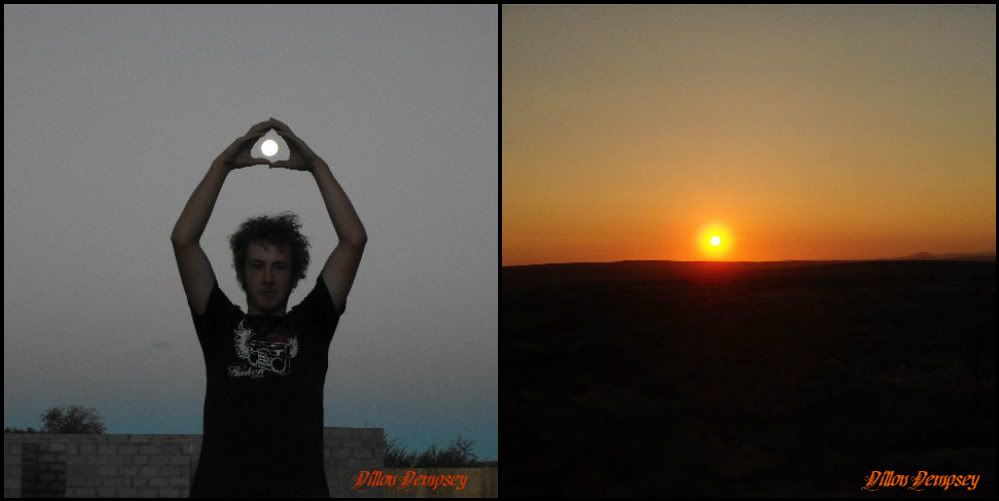
Here in Cape Town on 21 June we will have daylight for 9 hours and 53 minutes not bad when compared to London who will only have 7 hours and 49 minutes of daylight on their winter solstice which this year falls on 22 December.

Cape Town's Summer Solstice on 22 December will give us 14 hours and 25 minutes of daylight, very similar to Sydney. London gets a whopping 16 hours 38minutes daylight on their Summer Solstice on 21 June.

I feel very fortunate to live where I am, I have about 4½ hours difference in the amount of daylight hours between mid winter and mid summer. Just enough to make the difference noticeable and enjoyable.

London has more than 8 hours difference and Moscow 10½ hours, but Oslo has a humongous 13 hours. Huge differences like this can lead to Seasonal Affective Disorder. You can find out more about it here SAD

I have another reason to be happy about where I live, because when our Summer Solstice comes around I am almost guaranteed to have a full 14 hours blazing SUNSHINE. Unlike other cities who have cloud and rain interfering with their sunlight hours, Cape Town summers are always sunny.

Only 4 days to go ….......

You can compare your daylight hours here Time and Date

Sunday, June 5, 2011

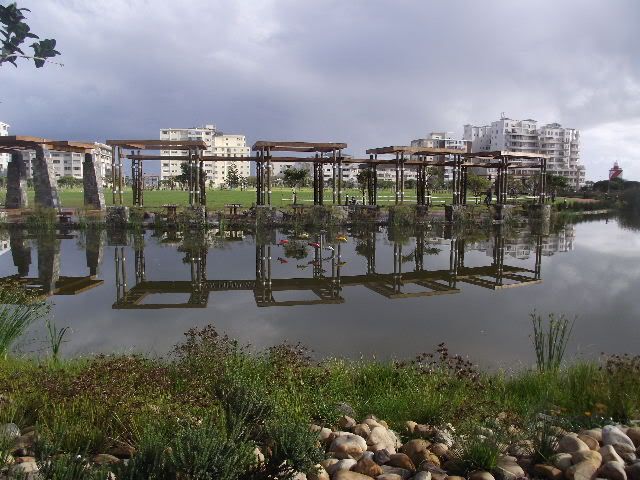
Green Point Urban Park


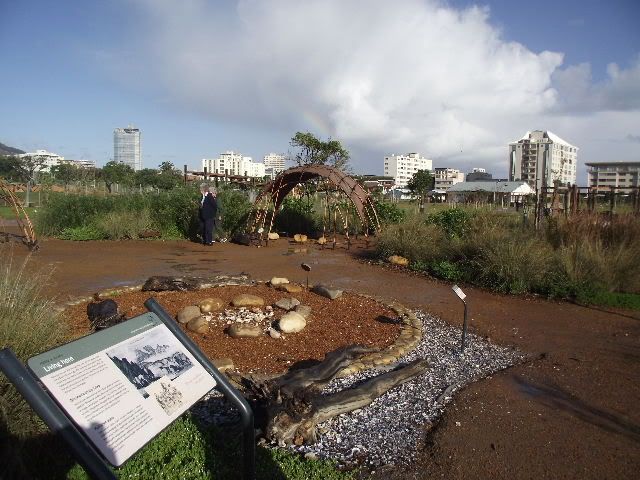
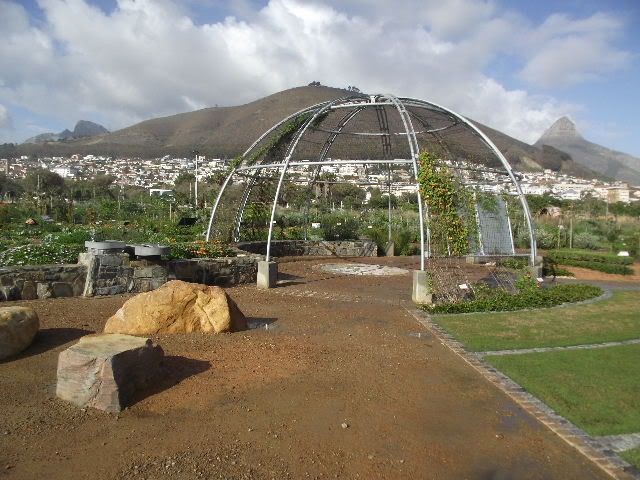
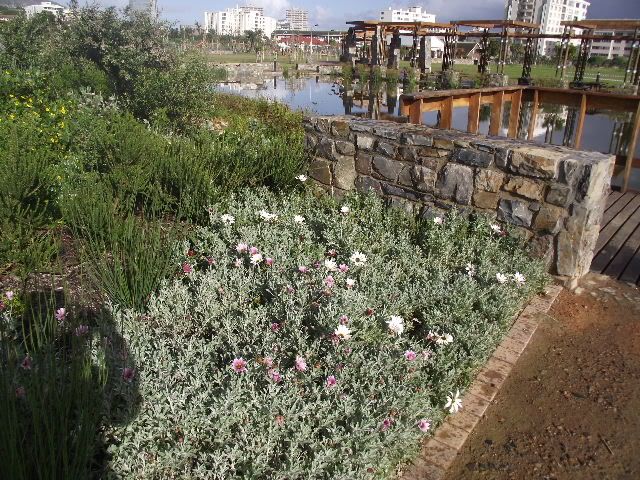
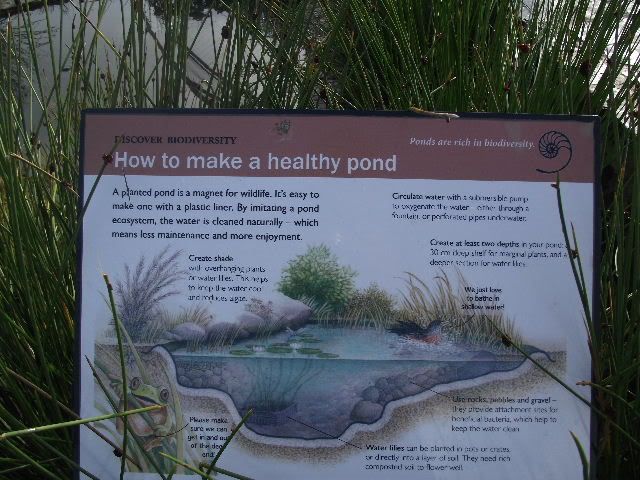
Today we visited Green Point Urban Park. What a fantastic place. Right in the middle of an overdeveloped city centre who would expect to find an area boasting all indigenous plants. Taking it a step further the park has posted informative signs all over the place. The walkways are wide making sure it never feels over crowded. Dogs are allowed in most areas, so long as you bring the poop scoop along.

After visiting the park we went to the Waterfront, I saw a sign apparently a quote from Jerry Seinfeld saying “There is no such thing as fun for the whole family.” Well after today I can firmly deny this.

My family consists of Mom, Dad, Son (aged 26), Son (aged 20) and Daughter (aged 9) – weird family and we all enjoyed the day.

If you live in Cape Town, you have to make this a place to visit.

WELL DONE City of Cape Town.


This is a really new garden which has achieved amazing results in a very short space of time. There are a large number of trees that have been planted that will totally change the face of this park over the next few years.

Sunday, May 29, 2011

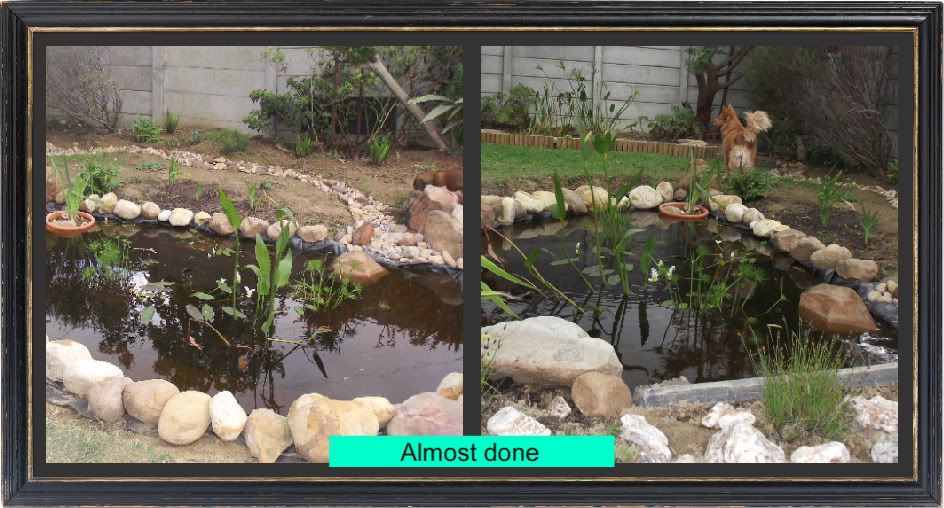
Our New Garden Pond

April and May brought me two essentials for gardening – rain and lots of public holidays!

The first early rains in April allowed me to fulfill my New Year garden plans. Those of you that follow Fer's Garden in Japan will remember his Carnival and all the great ideas we had for our gardens.


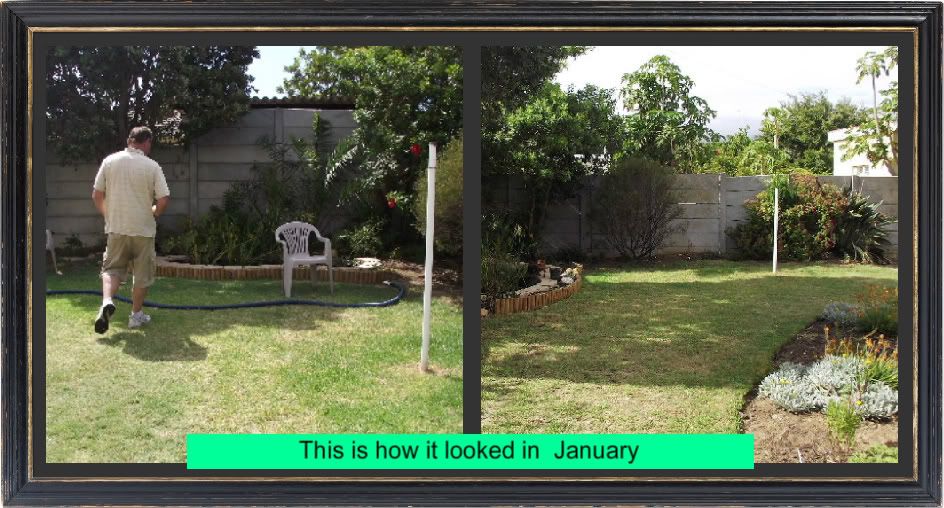
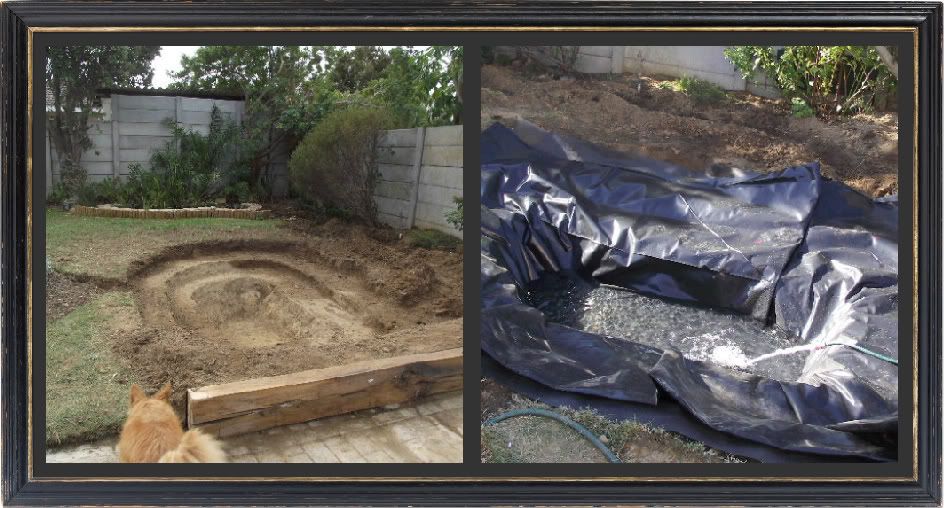
My dream was to build a second pond in the garden. After the first early rains in April the ground was a little softer - allowing us to dig.


The next few public holidays gave us time to cart all the rocks to the back garden - lots of aching muscles after that.

Hard to see in in the photo's but we have a little river bed leading from the old pond into the new one. We have a lot of pots in the bottom of the pond with aquatic plants. I am a little frustrated that I couldn't find any indigenous aquatics at our local nurseries - I gave up after visiting at least five different nurseries. A friend came to the rescue with our local Waterblommetjies (Aponogeton distachyos) and Vallisneria. I have planted Cape thatching reed, Arum lilies ( Zantedeschia aethiopica), ferns (Rumorha adiantiformis )and Aristea major around the pond. On the drier ledge near the pool paving I have Crassula falax, Crassula coccinea and Ficinia indica.

It still looks rather bare but I am sure that in a few months it will all be lush and green.

Sunday, April 3, 2011

Hidden Treasure

This blog is essentially about transforming an old established garden filled with exotics into one that boasts only plants from South Africa and more specifically from the Western Cape.

For various reasons this transformation will take place over a number of years. One of these reasons is that a garden makeover takes time and money, both of which are in short supply. Another is that I hope that some of the existing plants will provide protection and shelter for the new plants while they try to establish themselves. Finally I spend hours buried in books and the internet trying to decide on the most suitable plant for each area. With approximately 8500 different plant species in the Cape Floral Region this is no easy choice.


I have been waiting for autumn to trim back a very overgrown hibiscus and coprosma in our front garden. Once cleared I will have room for planting some new trees in winter. On the weekend hubby and I armed with hedge clippers and bow-saw attacked the targeted shrubs. After a few hours in the baking sun we had a huge pile of branches. We retired for a well deserved drink and left the clearing up for another day. Next day while I was back in the office hubby came home to finish cleaning up. When everything was cleared away he noticed a tree that had been growing in the midst of these two shrubs. I couldn't wait to get home to identify it, hoping all the time it would be something indigenous that I could save.


Identifying trees is not easy, There were no flowers so I studied the leaves. are they simple or compound? Are they opposite or alternate? Are the margins toothed or smooth? All of these answers still leave you with thousands of possibilities. The tree has grown quite tall with no branches near the bottom. The other shrubs had totally encircled it and so the only place to grow was up. Finally I spotted a small fruit. Out came the gardening books – with each possibility I consulted the internet for further information. After more than an hour I thought I had it, but I wasn't totally sure. Trouble was the fruit I had picked was closed – silly me hadn't opened it. I called hubby over to confirm my guess. Why don't you open the fruit and then you'll know? Voila! Opening the fruit solved the mystery- I have a wild peach. Kiggelaria Africana. I couldn't believe my luck, this was one of the. trees on my shortlist of possibles to plant. Now I have an established tree that just needs to be nurtured, it has suffered a bit of damage to some branches by chafing up against the other shrubs. I am sure with the coming winter rains and the space it now has it will flourish.


Kiggelaria Africana

Evergreen tree to about 11m and spreading almost equally. It can reach almost 20m in favourable conditions. Low branching with a non aggressive root system. Mine has branched quite high up due to its restrained growing conditions. The bark is smooth when young becoming rougher with age.

The wild peach carries bell shaped flowers with male and female flowers on separate trees. The fruit is small, approx 15mm diameter on my tree, round rough and greeny yellow. When ripe it splits open in four parts revealing black seeds covered in a bright orange – red sticky covering. A wide variety of birds including robins , mousebirds and white-eyes love this fruit. It is also host to the caterpillars of Acraea butterflies. These in turn attract cuckoos.

Kiggelaria africana grows in a wide variety of habitats and is found from the Western Cape through to Kenya.