Wednesday, April 25, 2012

True Blue


Nature is always full of surprises, I guess that is why I love gardening, there is always something new and unplanned happening.

I spend a lot of time researching the plants that I add to my garden, but sometimes it's the unexpected gifts that turn out to be best. Some time ago I bought an Indigofera frutescens from the nursery at Helderberg Nature Reserve. In the pot was another tiny seedling of something. Not knowing what it was I planted it any way.

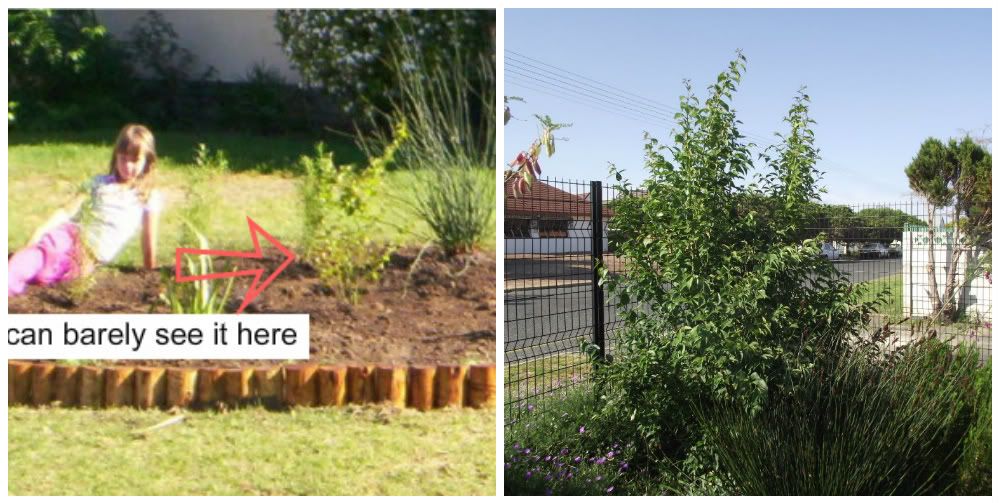
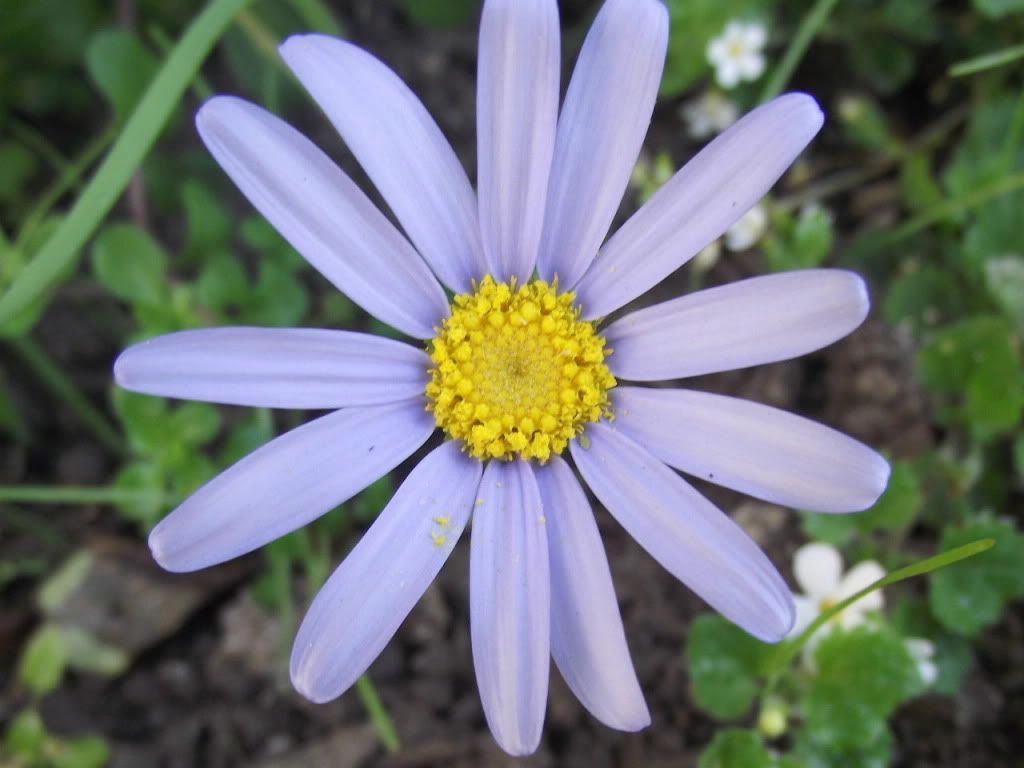
My free gift has turned out to be Felicia echinata. It has grown so well that it is almost as high as the tree I bought it with, in fact you can barely see the Indigofera between the leaves. I am sure this will change but in the meantime it is providing some lovely colour.

There are about 84 species of Felicia of which 79 are found in Southern Africa.

Felicia echinata has long stems branching out from ground level. These stems reach a height of about 60cm and are covered with small glossy green leaves with prickly toothed margins. Two to three beautiful blue daisy type flowers are found at the tips of these branches. Mine only ever seem to get one flower per branch. The flowers are about 20mm in diameter and occur between April and October.

Some of the branches first grow along the ground before turning upwards and occasionally these ground hugging parts will send out roots.

Felicia echinata is a really worthwhile addition to any garden , growing well in a sunny position and adding interest even when not flowering.

Another one of these blue daisies I have growing is Felicia amelloides. This is a small shrub, reaching a height of about 60cm (mine are lower) with almost equal spread. The oval leaves are covered with very tiny hairs giving it a sandpapery feel. This Felicia will tolerate light shade. The characteristic blue daisy type flowers stand out above the leaves, borne on stalks about 180mm long. It occurs naturally in the southern and eastern Cape, but is often confused with Felicia aethiopica which is found on the Peninsula. I am not entirely sure that I have F. amelloides although this was what the label said when I bought them.

Regardless of the name, these are really lovely fillers to a shrub border and mine are seldom without flowers. Unlike most other Felicias the flowers on these remain open even at night.


Finally made it to join Wildflower Wednesday -by the skin of my teeth. http://www.clayandlimestone.com/

Saturday, April 7, 2012

Rain Spider Babies


Great excitement in the garden on Thursday evening. 
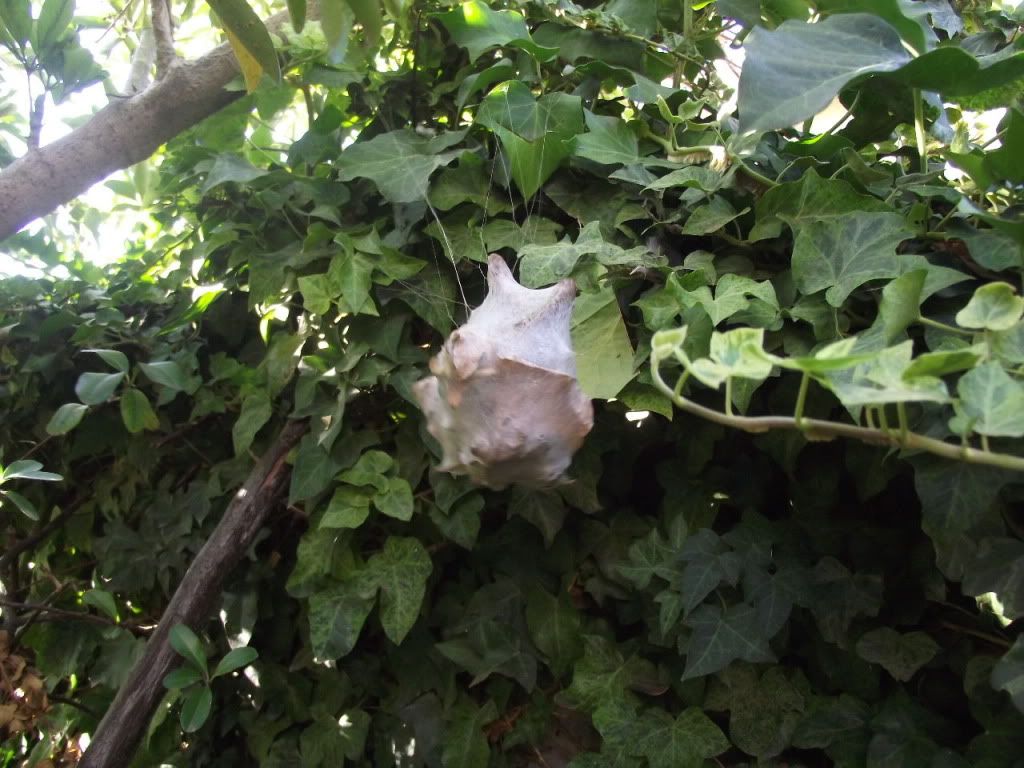
My daughter spotted this rain spider nest about 10 days ago and has been keeping a watchful eye on it ever since.

Thursday evening just before 7p.m. she went to have a look, an ear-piercing squeal told us something was happening.


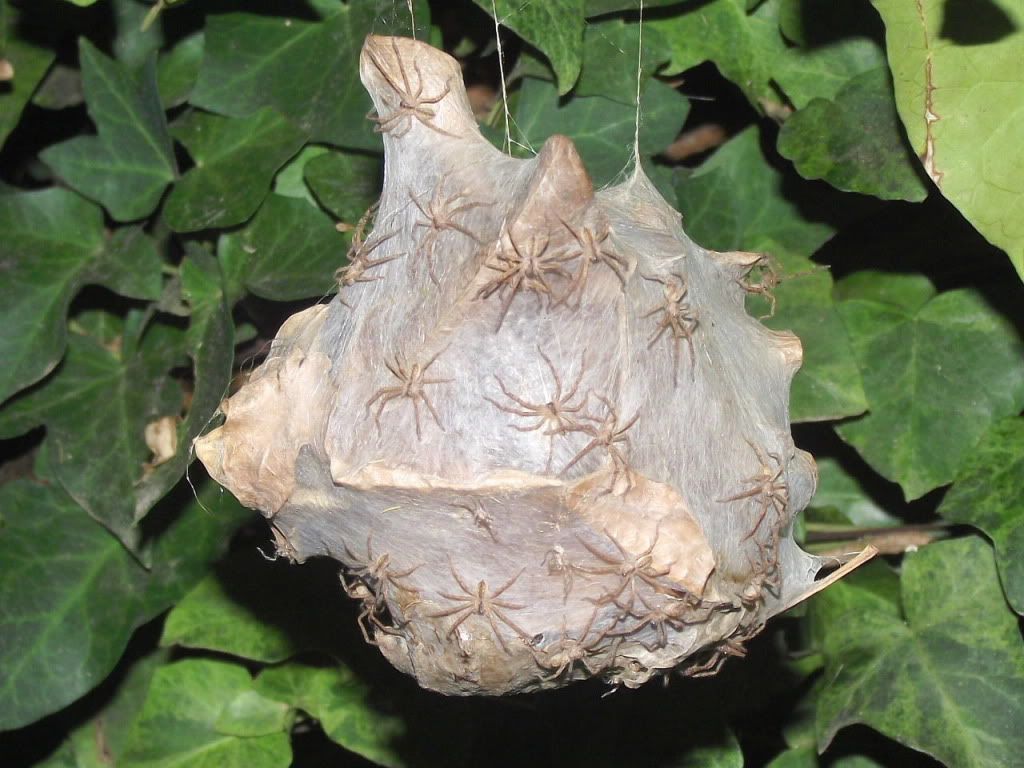
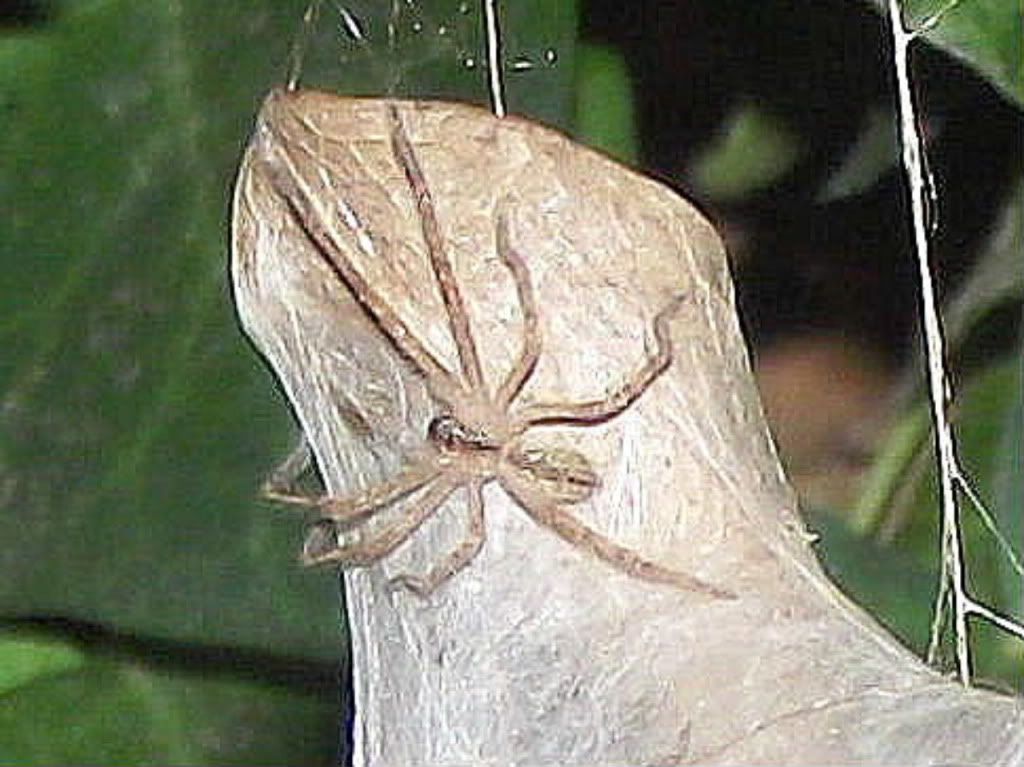
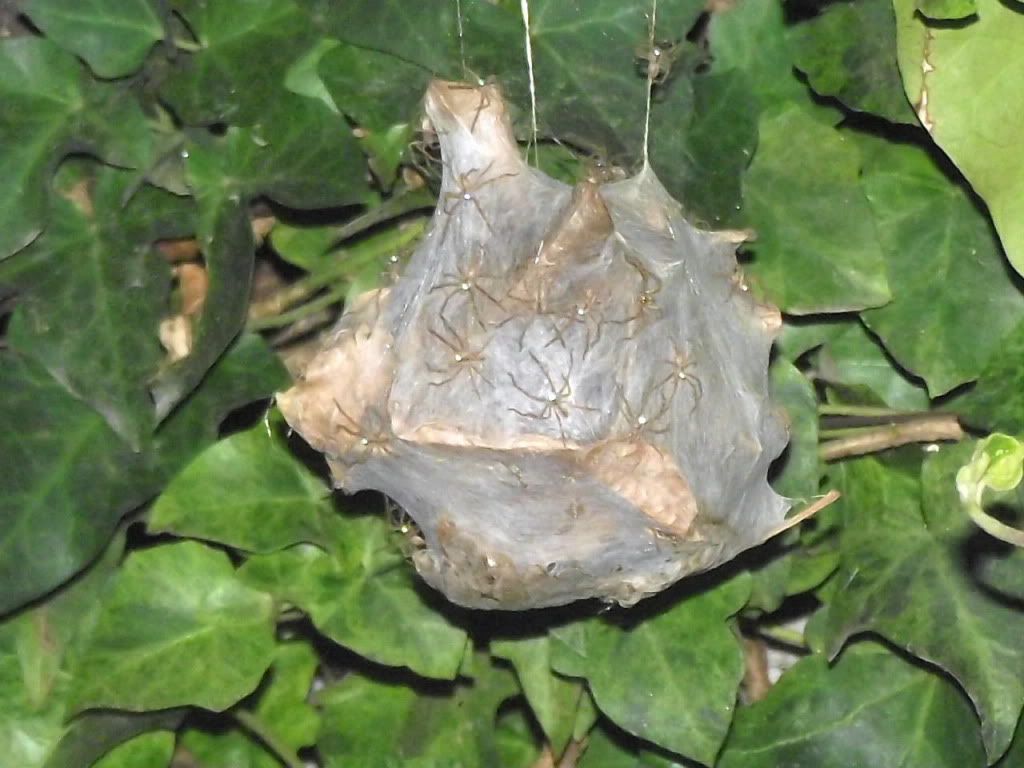
Yes! The spiderlings were emerging from their nest.


Hundreds of the little things climbing out and heading off into the safety of the thick ivy.


The nest is against our boundary wall with quite dense shrubbery in front of it.
Getting these photo graphs meant climbing through this heavy plant growth and getting quite close, all the while wondering where Mommy spider is. Female rain spiders can be quite aggressive when they have babies to protect.

All these photo's were taken by my son, which finally gave Mom the opportunity to get her own back. He has always been the practical joker in the family and has been the cause of more than one heart stopping moment. It was getting dark when the last few photo's were taken and I was standing behind him holding a torch. Then I saw my chance – I tapped him lightly on the shoulder and yelled. The reaction was perfect! He jumped back almost dropping the camera, ready to run but almost fell over me who by then was rolling on the ground with laughter.

Rain spiders lay between 50 and 300 eggs. I don't know how many babies came out of this nest but it was a lot. There were at least 30 visible on the nest at any time, with a continual mass exodus lasting almost half an hour.

Friday, March 30, 2012

Bugs in my Garden


Most of my garden is dedicated to indigenous plants, but I have reserved a small area for food plants. We have a little lemon tree “growing” in a pot. “Growing “ because in the 3 years we have had it I don't think it has gained even 1cm. Every year it gets attacked by caterpillars that strip it bare of all it's leaves and the poor thing then expends all it's energy just trying to survive. This year when the caterpillars appeared I was armed with my camera.


They start off looking like this, and are known as Orange dogs, they are meant to resemble bird droppings and thus not look like a tasty meal to any hungry birds.


As they grow they change into these big fat green ones with beautiful markings. If you touch one it rears up and 2 “horns” protrude out of it's head, again a defence mechanism meant to ward off birds. Besides birds these caterpillars also fall prey to wasps, who lay their eggs inside the caterpillar to provide food for their young when they hatch.


The few that manage to survive all these perils eventually emerge from their pupa as the beautiful Citrus swallowtail butterfly.


Knowing this would be my reward I think will justify my recent crazy behaviour. As I mentioned I was keeping a close eye on the caterpillars and before work one morning I could see that almost all the leaves were demolished on my little tree. I had been browsing my books and the internet to find suitable indigenous plant hosts, having identified a few I tried to find some at our local nurseries – no luck. In desperation I sent my son to buy another lemon tree, with instructions to carefully transplant the hungry caterpillars. He told me that the nursery had offered to sell him pesticide to control caterpillars – he wisely declined! The next morning however when I went to look at their progress I could only find 1 of the original 6. I found 2 lying dead on the ground – then it struck me, the nursery must have treated the tree with their terrible poison. I hastily washed off the leaves in an effort to save the remaining caterpillar and I also found one starving little one on the original tree. It has been fun and enlightening to watch their progress, but alas both have since fallen prey to birds. With all these natural predators I hardly think gardeners need to kill them also, in most cases if your trees and shrubs are large and healthy then most insect attacks will not cause any lasting damage, even my little lemon is already sprouting new leaves.

Gardening to me is more than just healthy looking plants, it's about a healthy ecosystem. that means that caterpillars are important as they eventually become butterflies. Even the spiders that venture into my house and have occasionally joined me in the shower are carefully removed and returned to the garden where they aid in the control of pests.
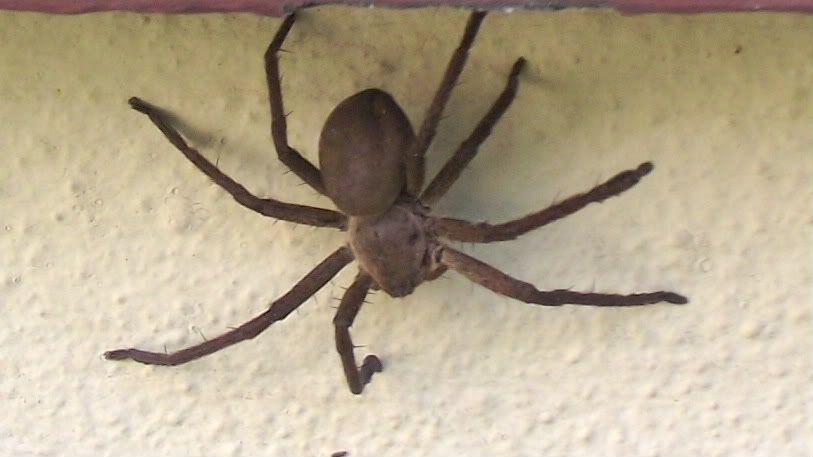
Rain Spider
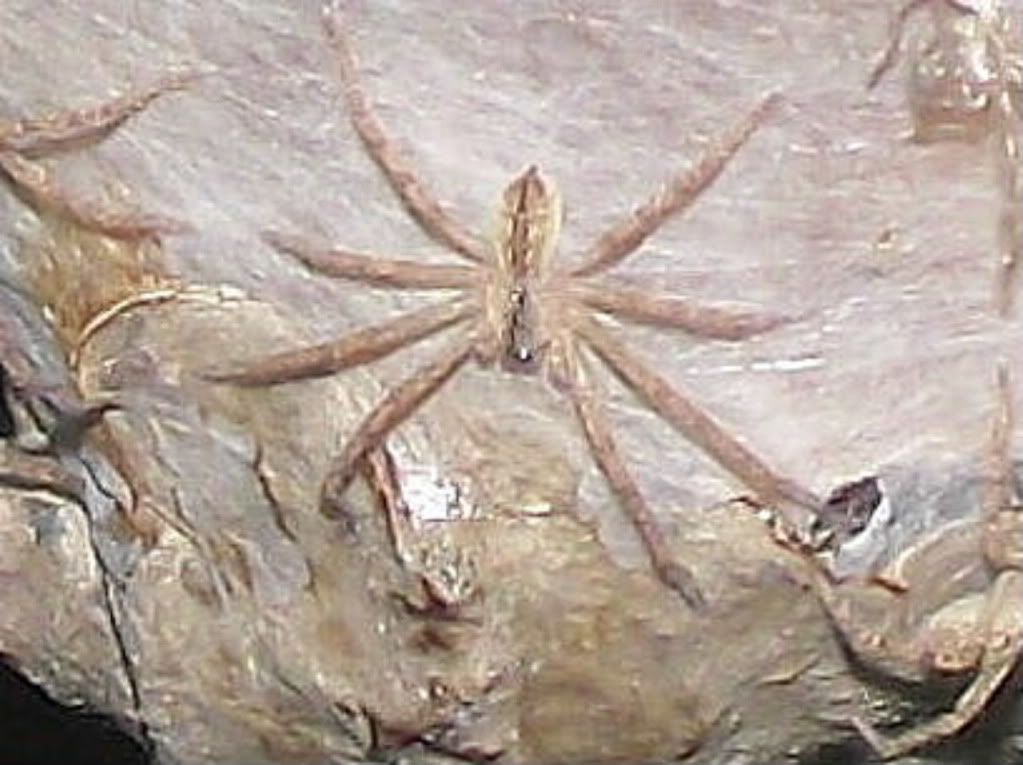
Rain Spider nest


My daughter spotted this nest hanging in the garden, a quick Google search identified it as the nest of the rain spider. (Palystes castaneus) It takes the female about 3-5 hours to construct this nest which is a little larger than a tennis ball, she stays close to the nest until the spiderlings emerge about 3 weeks later. Although rather large and scary looking these spiders are quite harmless. Mostly they confine themselves to the garden where they go unnoticed, but occasionally in the rainy season they will venture into the house. They do a wonderful job controlling insects including cockroaches but they do unfortunately include the occasional lizard or gecko in their diet as well.
Gecko


Next time you spot one of these don't swat it, stop and look. It belongs to the family Mecoptera (Hanging flies) and mosquitoes form a large part of their diet.


Another useful mosquito predator is the dragonfly.


I think this one is known as a Blue Emperor (Anax imperator) belonging to the Hawker (Aeshnidae) family of dragonflies. This is the female busy laying eggs which are actually inserted into aquatic plants.

I believe that every creature in my garden serves a purpose and that if you destroy even one then you upset the balance of nature and will ultimately pay the price. Taking the time to learn about the creatures in the garden just adds to the pleasure of gardening and also provides an invaluable learning experience for my children.  

Saturday, December 31, 2011

Last post for 2011

Here I was thinking that I can't let 2011 go by without a last post, but I couldn't come up with anything to write about. Then I popped over to Diana - always full of useful information and also inspiration. So here it is - to celebrate the 12 days of Christmas, I have selected 12 flowers one for each month of the year.

JANUARY

Bulbine frutescens - this flowers for most months of the year, but I really appreciate it in January when little else can survive the scorching heat.

FEBRUARY


The delicate flowers of the Indigofera jucunda are almost at an end, they start flowering in December, filling the tree with a mass of tiny blooms.

MARCH


Miribilis jalapa - this will probably be the last alien I remove from my indigenous garden - if ever. These wonderful water-wise flowers start springing up in November. providing interesting colour right through till May, then they obligingly die back allowing my indigenous beauties to shine.

APRIL


Asystasia gangetica - really useful ground cover that flowers throughout spring and summer

MAY


Strelitzia reginae - showing off it's striking blooms.

JUNE


You know it's winter when Aponogeton distachyos start to flower - beautiful and you can eat them too!

JULY


Can't beat Gazania's for winter colour

AUGUST


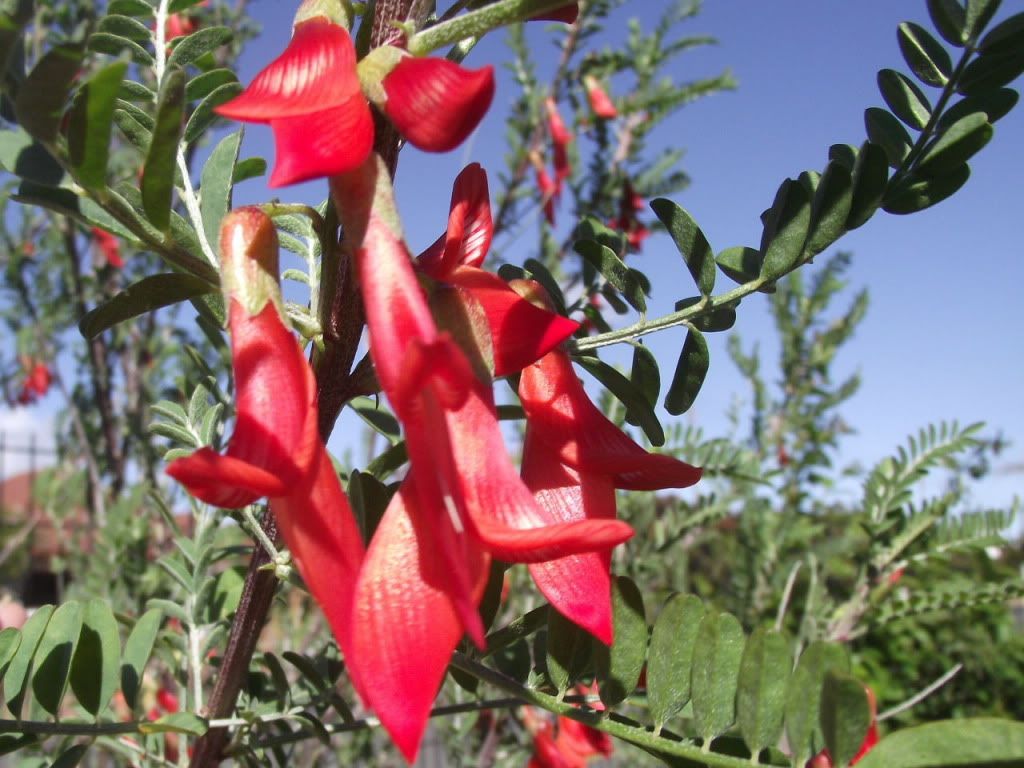
Stunning display from Sutherlandia frutescens tells me that spring is not far away.

SEPTEMBER


Hard to choose in my favourite month of the year, but this pelargonium never fails to delight.

OCTOBER


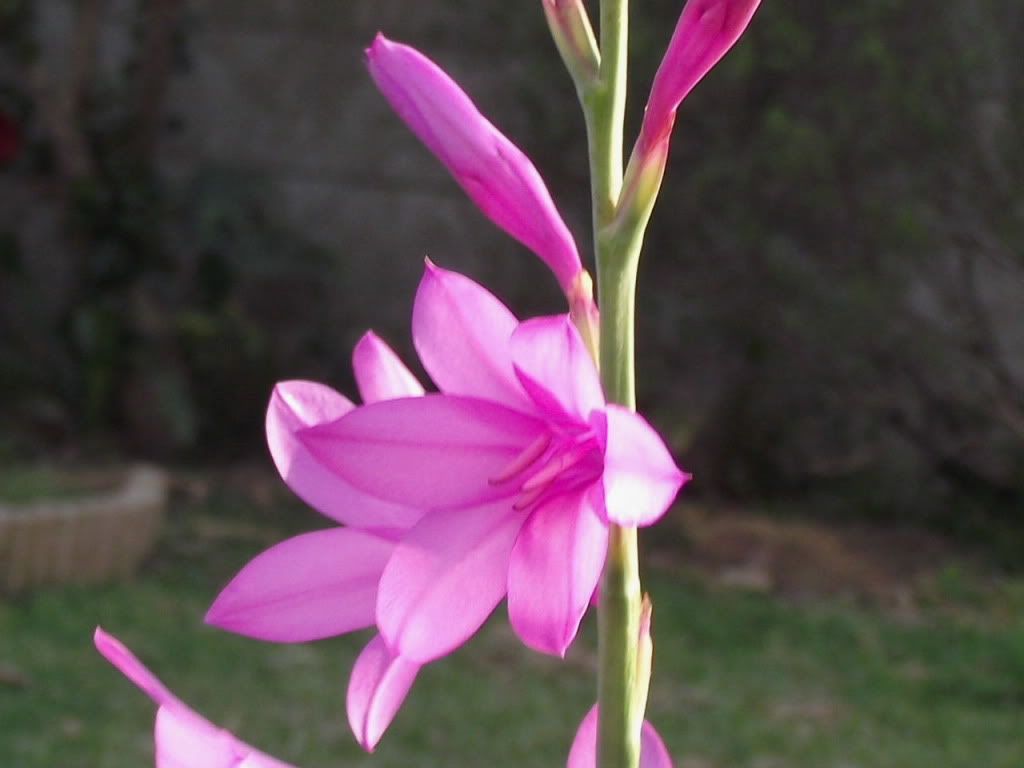
Watsonia borbonica - my favourite spring bulb.

NOVEMBER


Can't help but be impressed by this King Protea - the size of my head. This was taken in Helderberg Nature Reserve

DECEMBER


Crassula coccinea putting on a dazzling Christmas display.

HAPPY NEW YEAR


Wednesday, November 9, 2011

Use me More

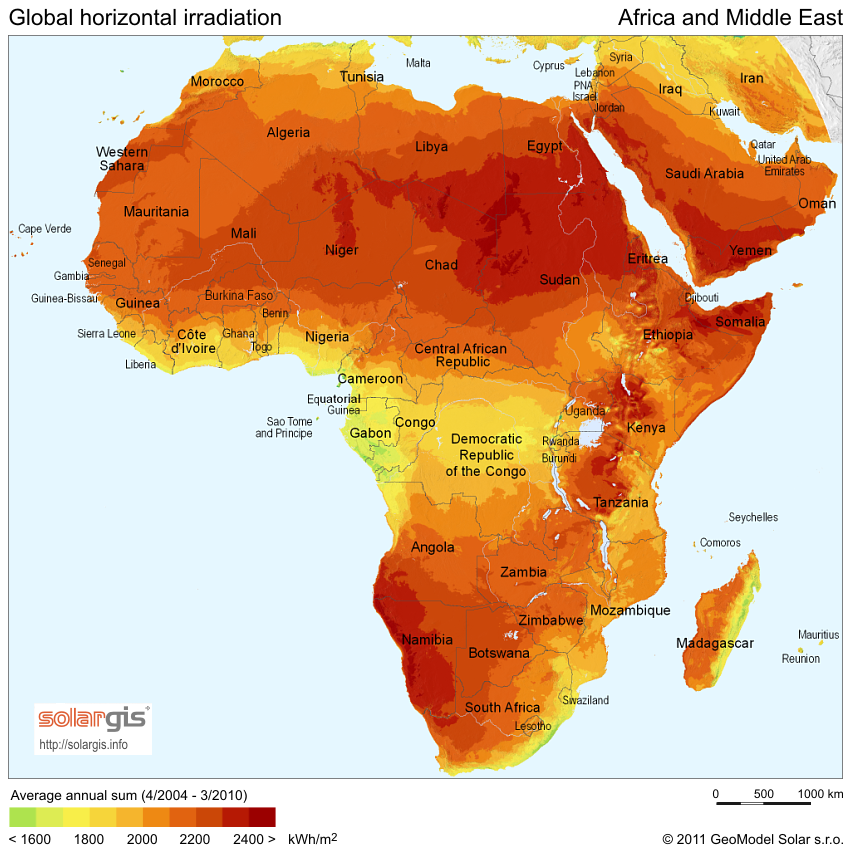
South Africa is one of the best countries for using solar power

And if you live anywhere near the coast you will know that we certainly don't lack wind power.
The trouble is we are not harnessing much of this available power. At the moment the bulk of our alternative energy is left to private individuals and the cost is exorbitant. We are not even offered the opportunity of putting excess power back into the grid. 

 Eskom is still investigating new nuclear power plants and investing in coal fired plants. What are they thinking? Clearly they aren't.
Despite the ridiculous salaries their top management earn (R18.5 million) see:
 Salaries of Eskom execs doubled-20110627
Eskom and Government keep arguing that alternative energy is too expensive and so we have to keep using coal. The problem is they are not looking at the real cost of coal generated power. When calculating the cost they forget about about the strain placed on our water resources, they forget about the health issues of the people living around these plants and they definitely haven't thought about the impact on climate change. You can read more about the cost of Coal fired power here:

If you are as horrified by these facts as I am then please join me in asking Government to use the sun & wind more.
USE ME MORE
(Sorry this technologically challenged person can"t get the link pic to work properly - so please click the USE ME MORE  text)
 To make my bulb shine brighter, Click here: PetitionLinkButton.png


Thursday, November 3, 2011

Pretty Pelargoniums

This post was meant to be for Clay & Limestone's Wednesday wild flower meme, but the end of the month is always hectic at work and  blogging time is limited, so I've missed the deadline. But these are too beautiful to be ignored so I am posting it anyway.  I have decided on Pelargoniums . Firstly because they would be well known to overseas readers and secondly because they are such easily grown, rewarding plants.

I know there are many sites trying to clear up the confusion between Pelargoniums and Geraniumms but in case you haven't read them – here's the quick answer. Pelargoniums belong to the family Geranicae of which there are approximately 800 species. These are divided into Geraniums with five equal petals and Pelargoniums with a variety of flower forms but mostly with 2 smaller petals above and 3 larger petals below.(Can also be the other way around - 2 large above and 3 small below). South Africa is blessed with about 220 species of Pelargonium. My garden boasts only 8 of these. Pelargoniums hybridize very easily leading to the vast variety available in nurseries and also leading to the confusion I have in correctly naming the varieties I have growing. I have got as far as putting them into categories. If there is an expert out there I would appreciate any help in naming or correcting any errors.

REGALS
These have large showy blooms in a variety of colours.
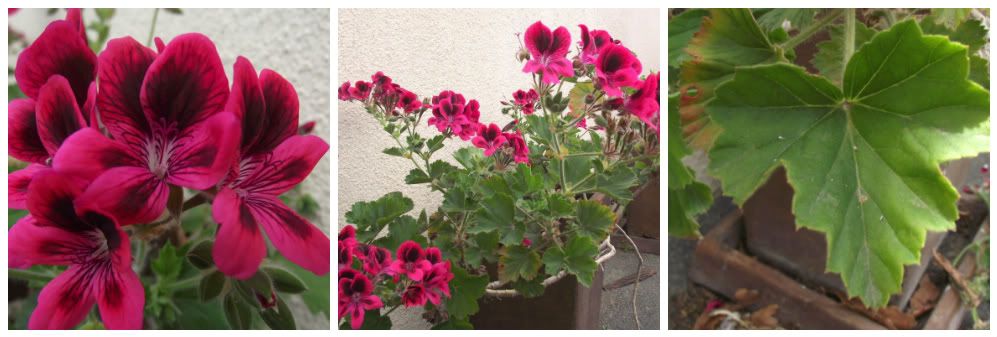
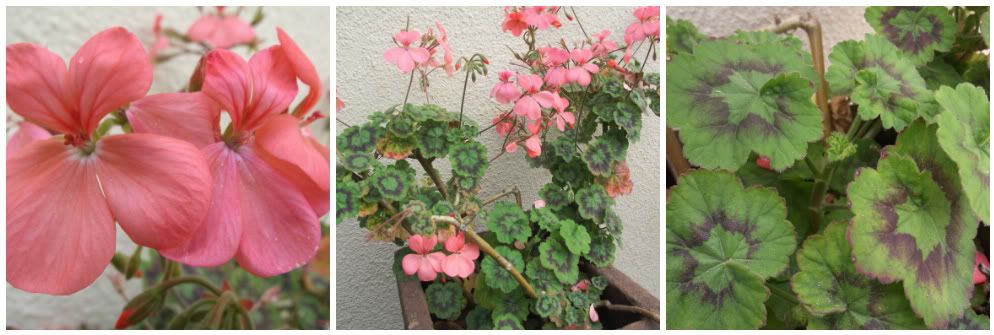
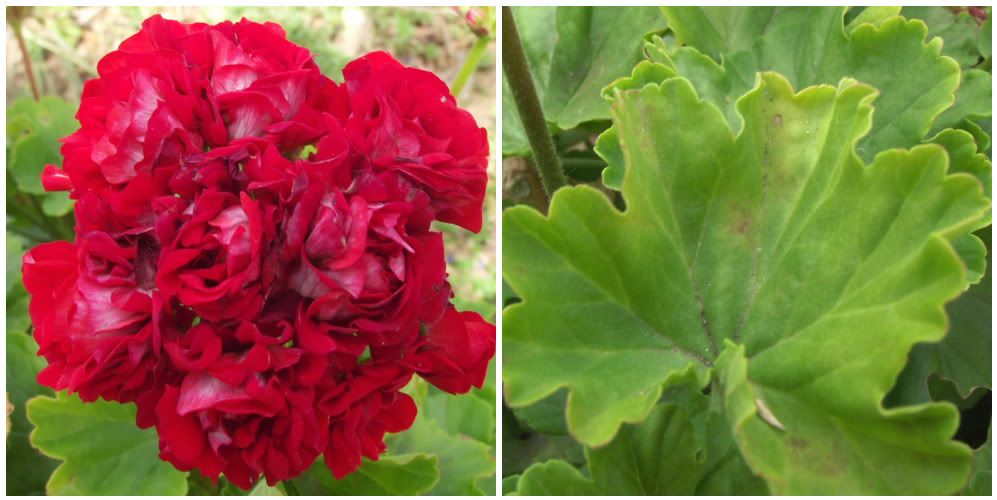
Definitely a Regal, it's blooms are absolutely stunning but despite reviewing hundreds of photo's I can't positively ID it.
Pelargonium cucullatum - this one I initially thought was capitatum, but it has no scent and the leaves are tinged with red on the edge.


IVY LEAFED
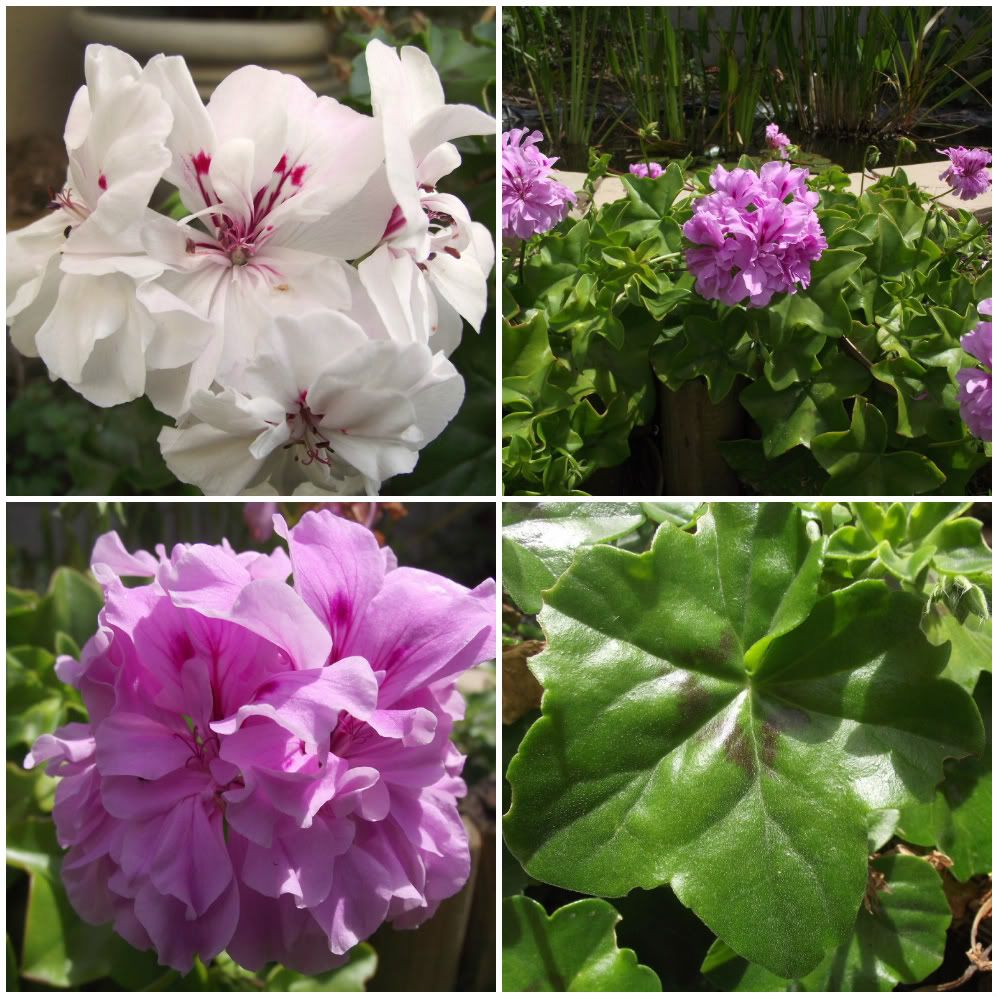
As the name indicates these have typical ivy shaped leaves and a trailing habit.

Pelargonium peltatum - the leaves are smooth and semi-succulent.

SCENTED
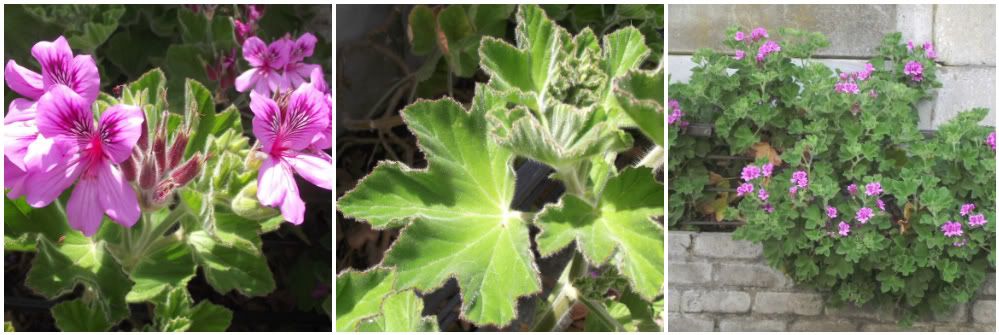
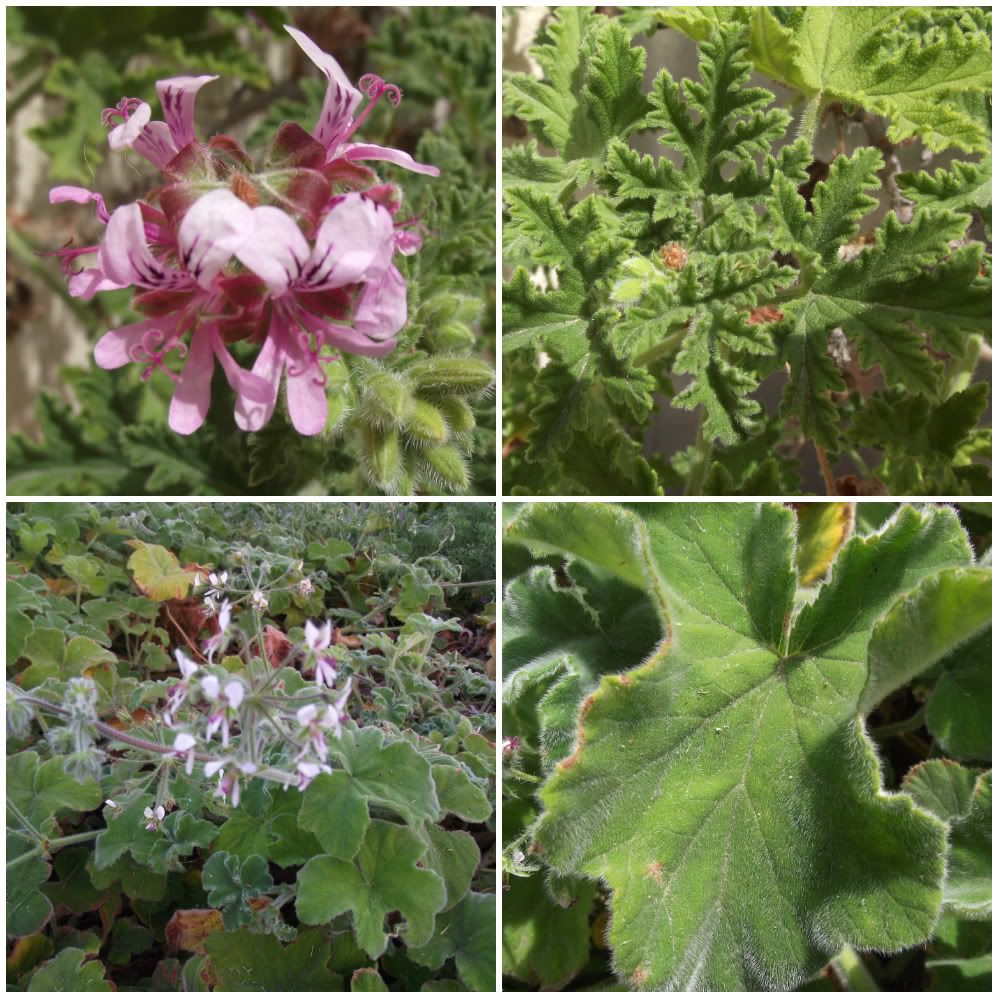
Flowers from this group are usually small and insignificant, but foliage is highly aromatic.

Pelargonium graveolens -Rose scented (above)
Pelargonium tormentosum - Peppermint scented (below)
I love these - just brushing against the leaves releases the most amazing aroma.

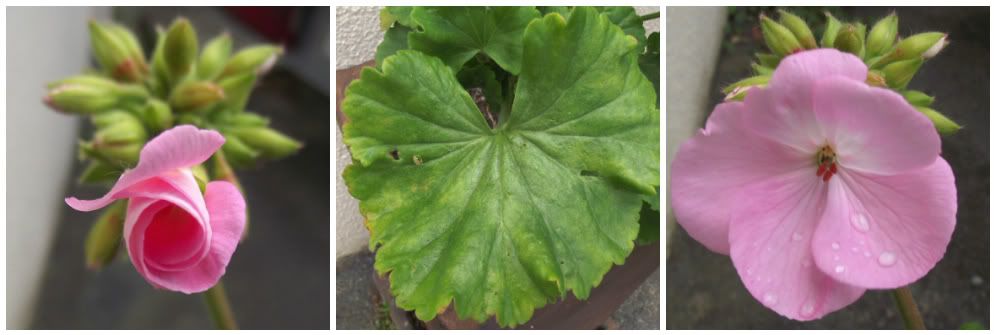
ZONALS
Most of these, but not all, have a darker horseshoe shaped mark on the leaves.
Pelargonium inquinans? Not sure about this one, it does have that typical smell, but no horseshoe marking on the leaves.

This one is definitely a Zonal - but which one?

And this one?


Monday, October 17, 2011

Garden Update October 2011

It is mid October and that means we are well into the last quarter of the year, before we know it 2011 will be history.

Before that happens I think it's time for a garden update. I'll start first with the casualties. I lost both my wild Rosemaries, two of the three Orpheums and most recently my only Lobostemen. All of these were in the front bed that we planted in April 2010. Every one of them went from looking healthy to totally dead within 2 weeks of showing the first brown leaves. I am not sure but I think it may be root rot. We have clay soils under laid by a layer we call “koffie klip” - this is basically a 300mm thick layer of small stones cemented together by clay. Although we added copious amounts of compost to the bed I don't think we dug deep enough to penetrate the koffie klip. This essentially means that the roots can't get through, so they they become waterlogged in the upper layers and become susceptible to fungi.

The other casualties have been in my back garden where powdery mildew totally wiped out one of my Anisdonteas. It also affected my Barleria and Hypoestes so badly that I got fed up and ripped them all out. Any ideas of how to treat this? I have read that spraying with milk is supposed to help, so I am trying that on my remaining Anisdontea.
RIP
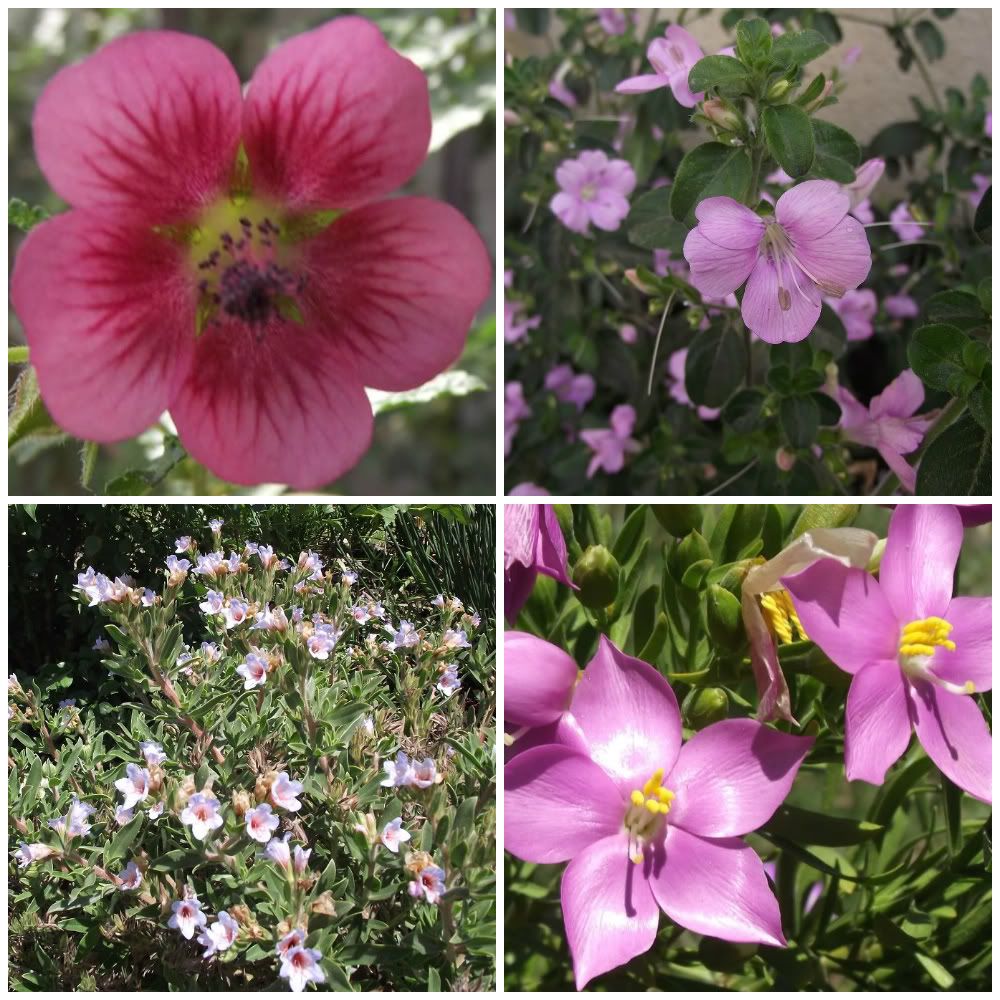
Clockwise from top left - Anisdontea, Barleria, Orpheum & Lobostemon

My ever present snails destroyed my only orange Clivia by eating right through the flower stalk just as the buds were about to open.

Although all of these failures were disappointing there are more than enough successes to make up for it.


The Halleria Lucida that we planted in April 2010 is now over 2 metres tall.
Oh yes we also added a fence to the front garden - yuck!

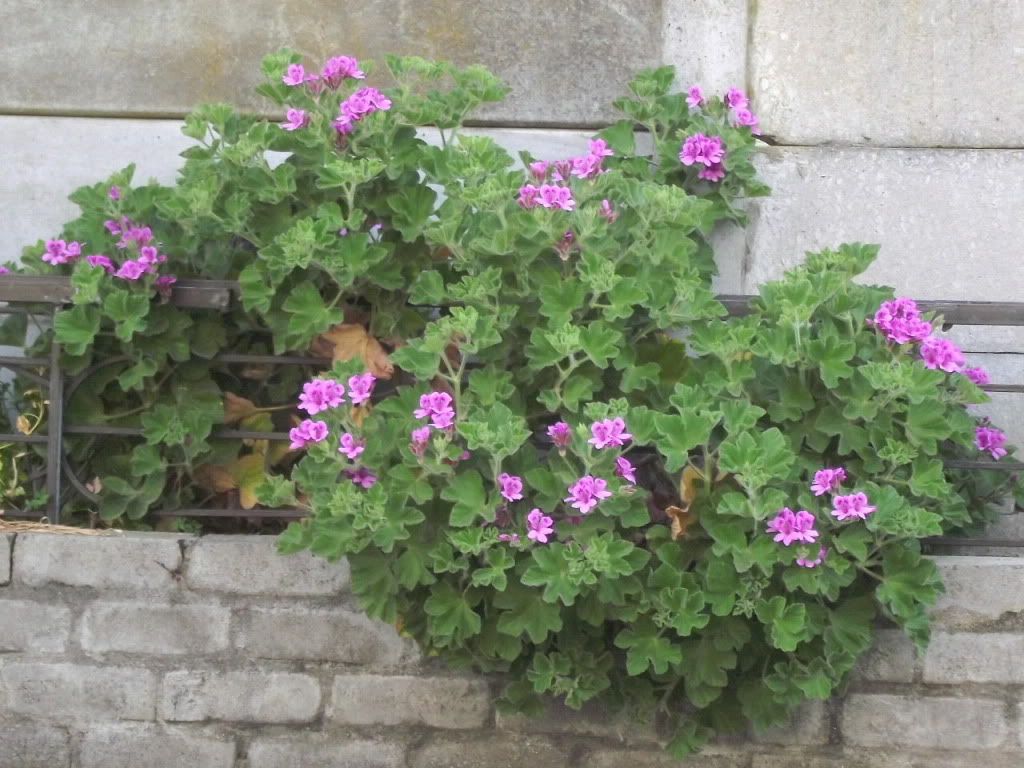
 The Pelargonium capitatum has also doubled in size and is now in full bloom. Hopefully it will soon cover the ugly wall.

Pelargonium cuculatum
                                                                    
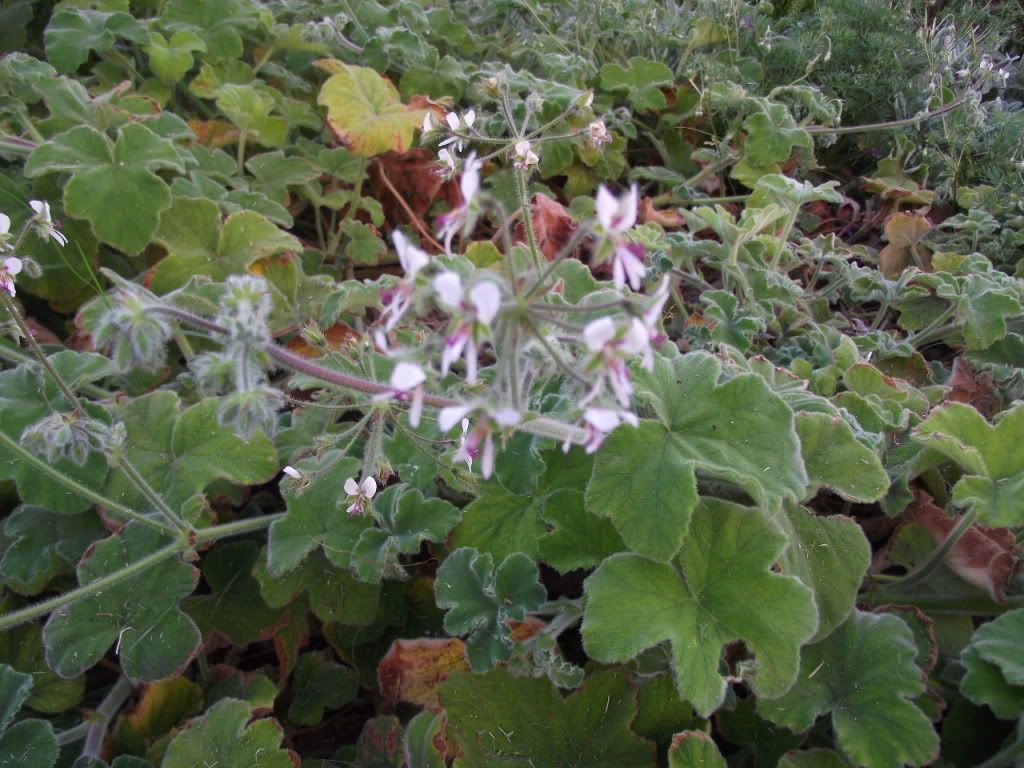
 The flowers on the Pelargonium tomentosum are insignificant but I can't resist touching the soft furry leaves and enjoying the peppermint scent that they release.
Pelargonium tomentosum

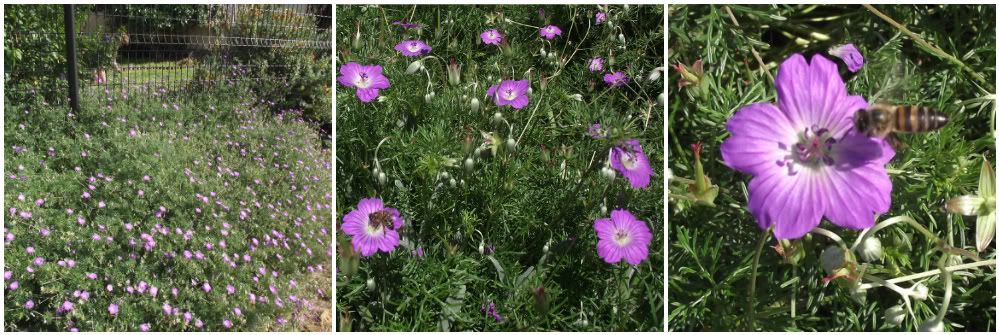
The Geranium incanum flowers for eleven months out of twelve and is popping up like a weed in almost all my other beds. This is great as it is filling up all the gaps.

Geranium incanum

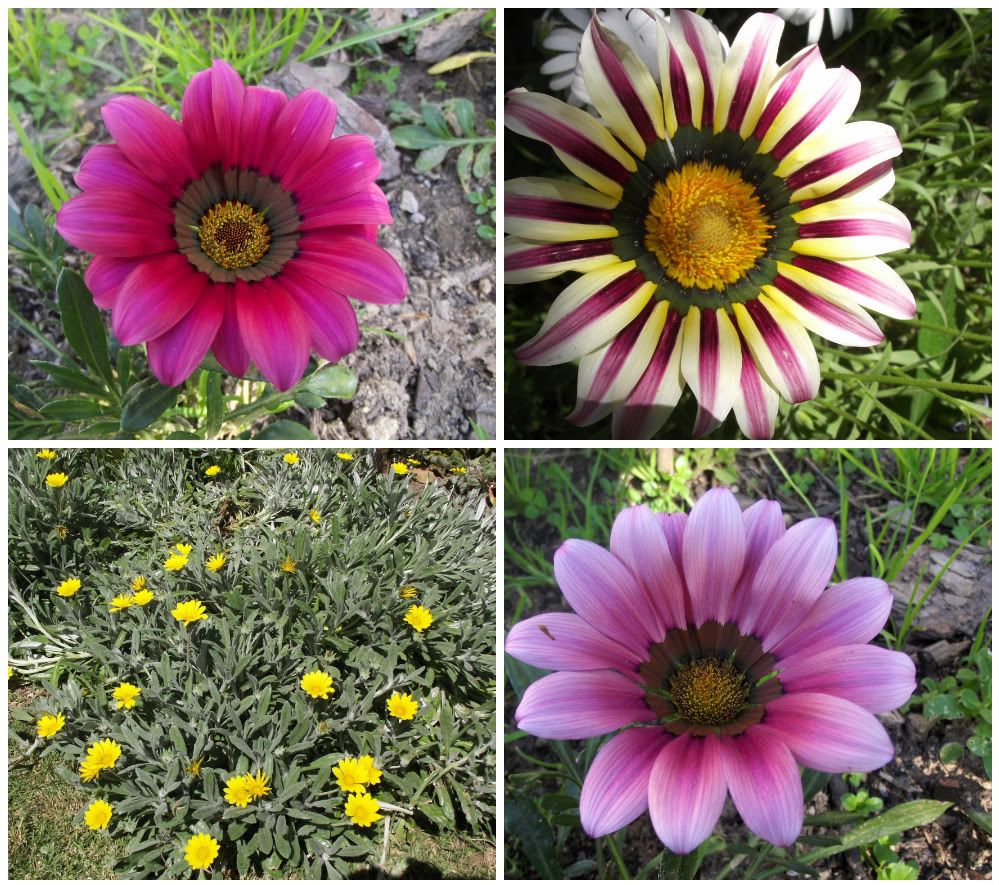
Gazania rigens is another amazing ground cover, it also flowers almost all year round and grows really fast in full sun, tolerating long periods of drought once established. You can't beat Gazania krebsiana for a stunning winter display, they have been flowering since June but they will stop flowering soon and their leaves will curl up showing their furry undersides to the hot summer sun.
Yellow Gazania rigens, an ugly duckling compared to the others, but it does flower for much longer.

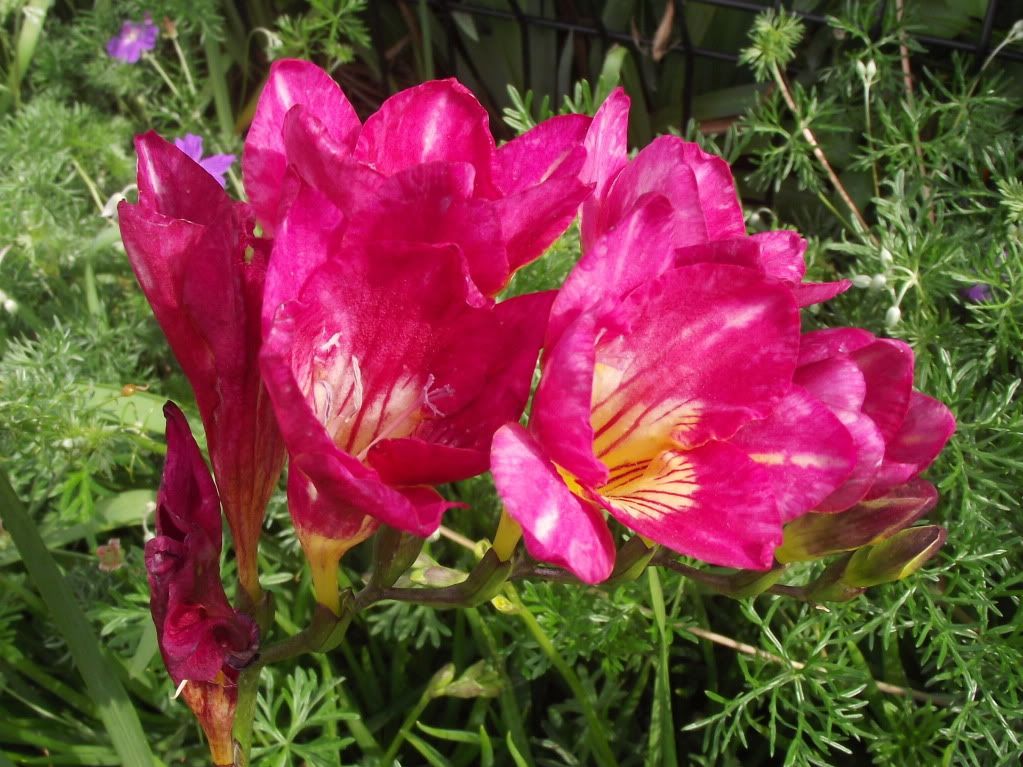
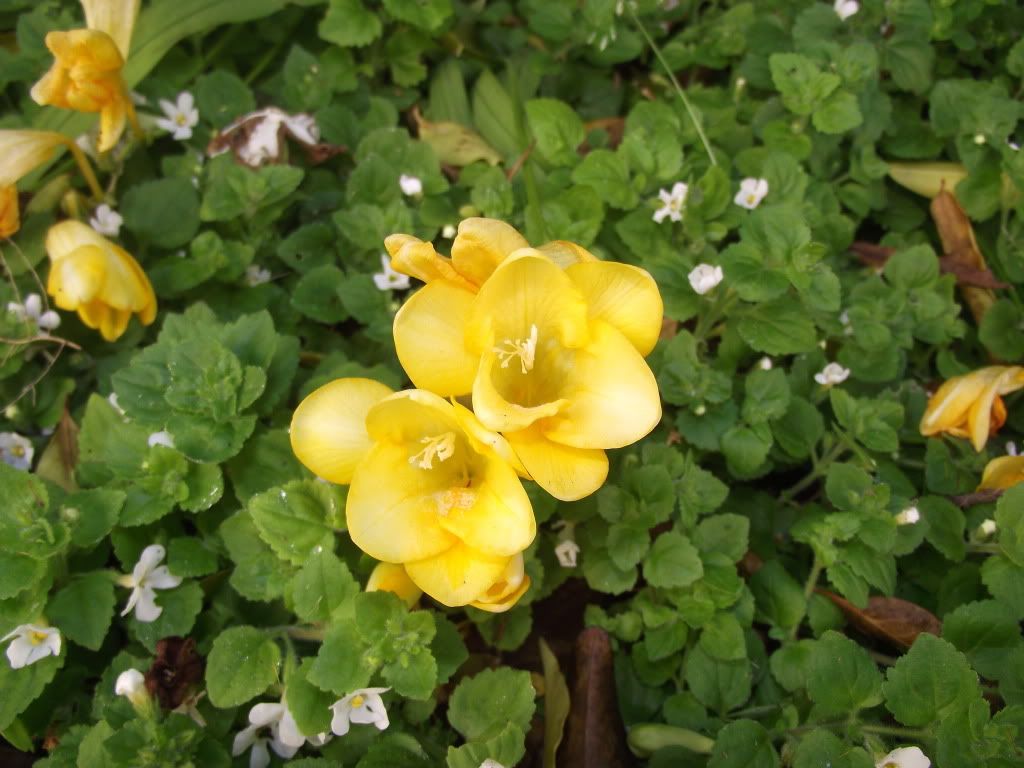
The Freesias always put on a lovely display in early spring.


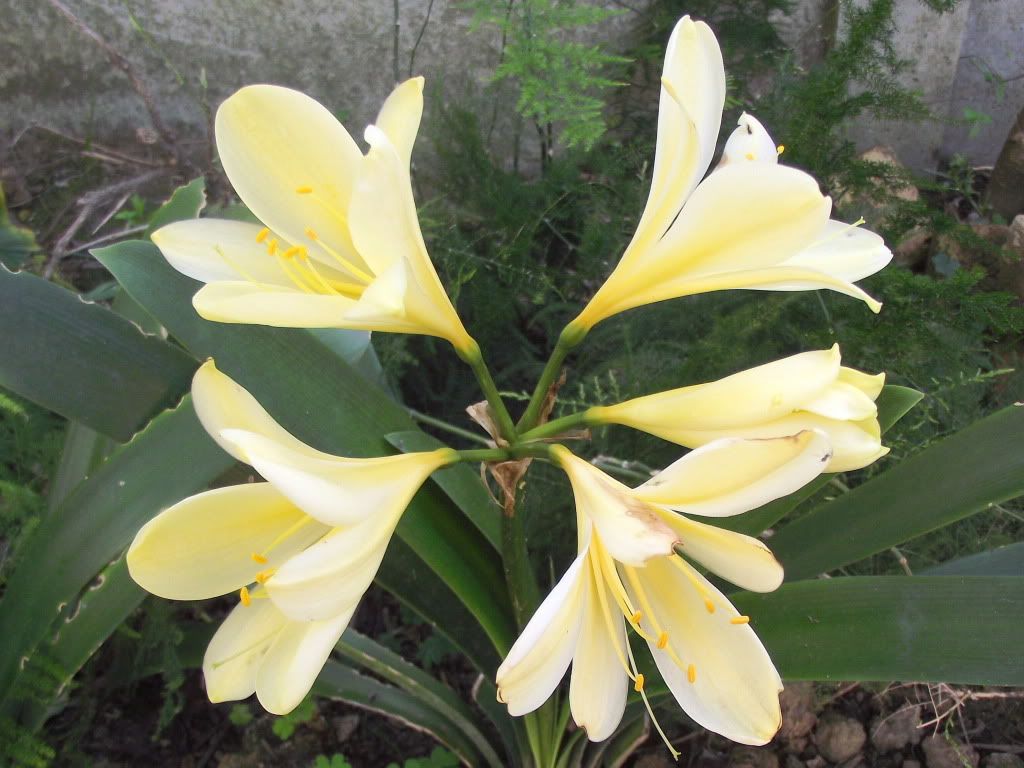
I bought some Clivias at a nursery sale, they were not flowering at the time so I assumed they would be the common orange ones - but look what I got! This is the only one of the four to flower - can't wait to see what the others are.

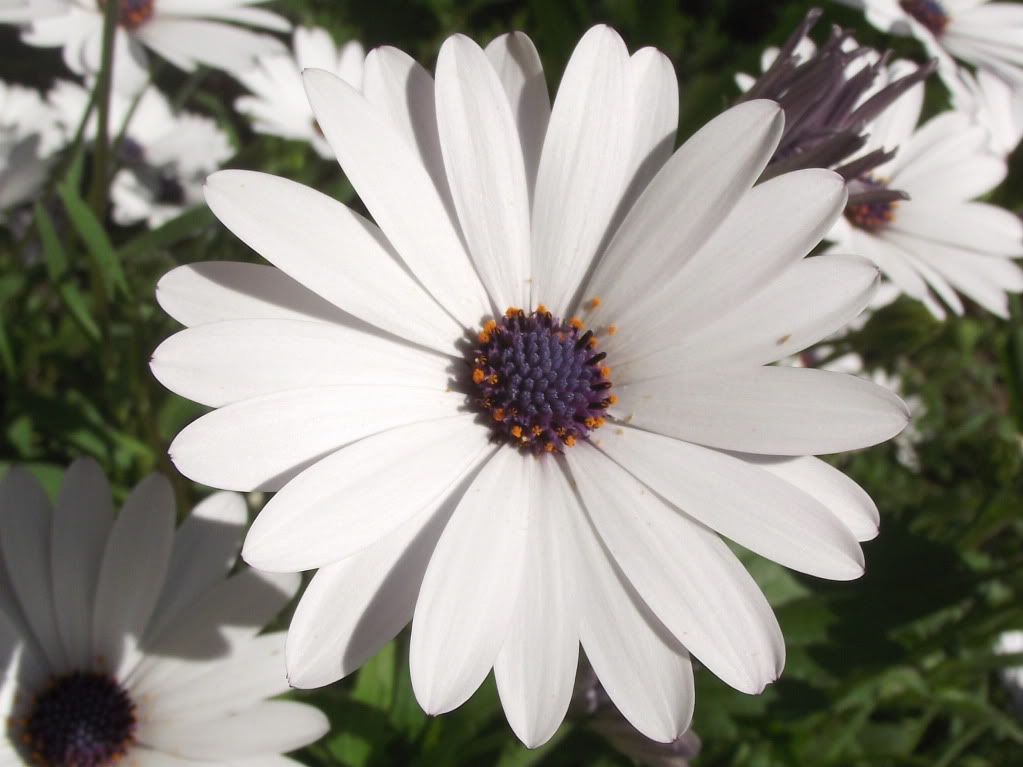
Dimorthopeca pluvalis grown from seed.

Sutherlandia frutescens- I planted two of these bushes, this one has grown much faster and put on a stunning display of flowers in Spring.

Felicia amelloides - such a versatile plant. I have them growing as a border around our veggie garden where they receive blazing hot summer sun, but they do just as well in the front garden where the bed receives only a little morning sun.

Watsonia borbonica - only one of my bulbs has flowered so far, maybe I will be lucky and get a few more before their short flowering season is over.